Honeysuckle Bach Flower: For When You Live in the Past
 di Bianca Ioppolo · 2026-08-09 · 6 min
It's eleven at night and you're scrolling through photos from three years ago
It's eleven at night. Phone in your hand. You're not looking at anything new.
You're scrolling backwards. Photos from three years ago, an archived chat, the group thread from that holiday. And you think: that was a good time. Then you put the phone down and the present looks a little washed out.
If that sounds like you, there's a Bach flower that's about exactly this. And there's one mistake almost everybody makes when choosing it. I'll tell you halfway through, because it's the most useful thing in the whole piece.
First, the 3 signs. One: your sentences often start with "back when", "before", "in the days when". Two: faced with something new, your first instinct is to compare it to something old, and the old thing always wins. Three: anniversaries, dates and places can knock your whole day sideways, years later.
It's not a flaw. People with that kind of emotional memory are usually loyal and deep. The trouble starts when your head spends more time back there than here.
,I'm talking about?
Want to know which flower? The one that scents the hedgerows on summer evenings
I'm talking about Honeysuckle. The climber you find scrambling over hedgerows and garden walls, the one that fills the air with that sweet smell on a warm evening in June.
Edward Bach, the English doctor who put together his 38 flower remedies in the 1930s, placed it in the group for those with "insufficient interest in present circumstances". His description is still the clearest one going: people who live in memory, who believe happiness has already happened and won't come again.
Honeysuckle is a perfect image, when you think about it. You notice the scent most when the flower is already going over. It's a smell that carries you somewhere else: a garden, a house, an age you used to be. Bach didn't pick his plants at random.
That said, let's be clear about what Bach flowers are. They're very dilute, very gentle preparations taken by the drop. They don't have an active ingredient working on the body the way a bitter herbal extract works on digestion. They're emotional company, with nearly a hundred years of traditional use behind them. They don't work miracles and they don't replace anything. They give you a small daily gesture to lean on, and for a great many people that gesture genuinely counts.
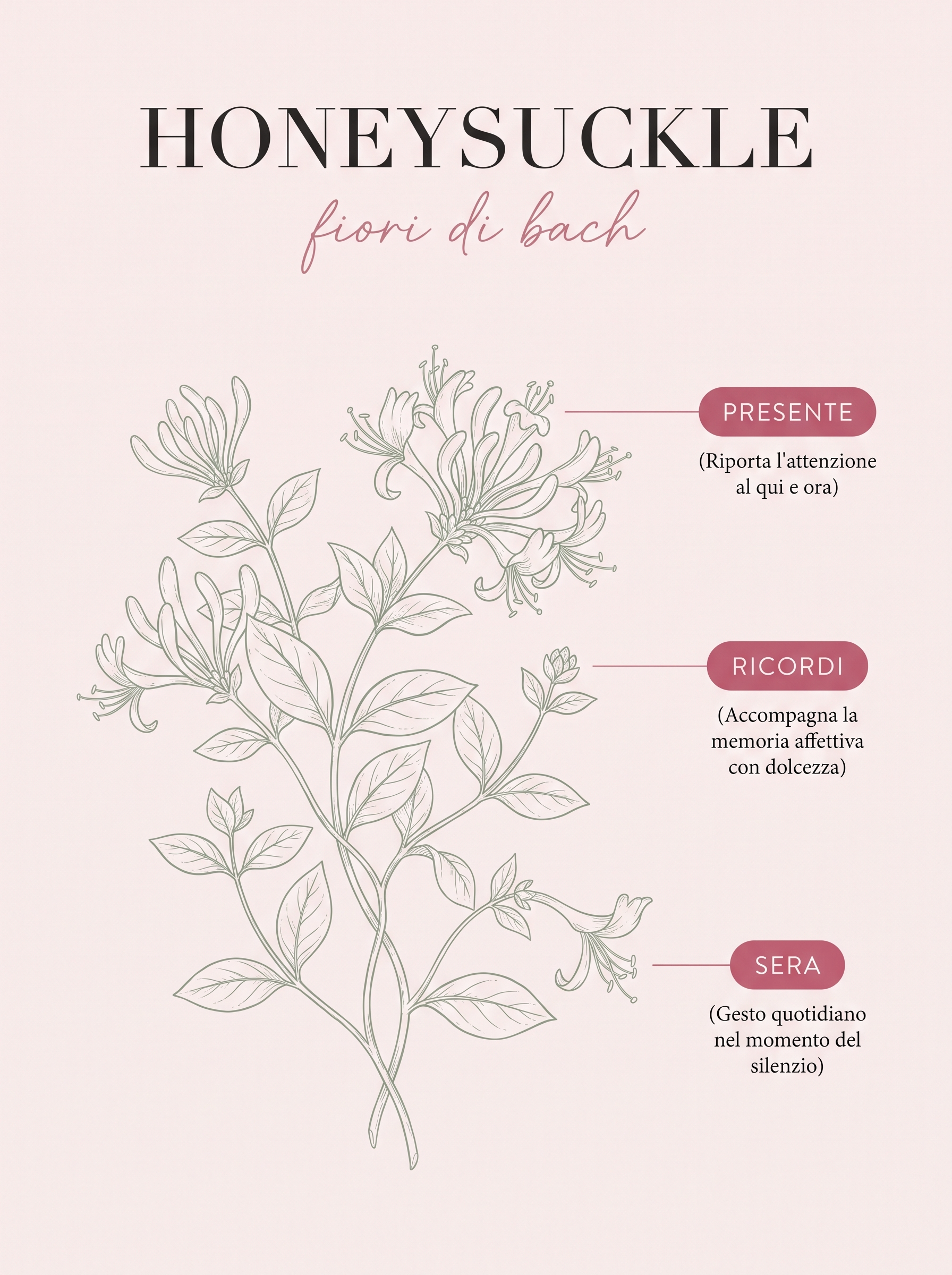
Here's what nobody tells you: nostalgia and regret aren't the same thing
Here's the mistake I promised you. Most people reach for Honeysuckle thinking "I feel bad about something that's over". But inside that "feel bad" there are two different things, and only one of them is this flower's territory.
Nostalgia looks back with fondness. It feels warm, inside. You're not rejecting the present, it just interests you less, because the film running in your head is prettier. That's Honeysuckle.
Regret is another matter entirely. It's chewing over a decision, the "if only I'd done it differently", the guilt coming back round. There's no sweetness in it, it's an open court case against yourself. It's not the same emotion, and Honeysuckle won't do much for it.
So, to be clear: if you go back with affection and forget to be here, Honeysuckle is yours. If you go back to put yourself on trial again, the theme is different, and it's worth talking it through with someone who's worked with Bach flowers for years.
Another situation where it's traditionally used: change. A house move, a child leaving home, the end of a job you did for fifteen years, coming back after a stint abroad. All moments when part of you stays behind while your body has already moved on.
4 drops under the tongue, and the moment nearly everyone skips
Let's get to the numbers, which is what you actually want when the bottle is in your hand.
You take 4 drops under the tongue, 2 to 4 times a day. If under the tongue isn't for you, put them in a splash of water and sip. Better away from meals, ten minutes or so either side. It's not a cast-iron rule, but you taste it better and the gesture stays more yours.
And now the moment nearly everyone skips: the evening. Morning and afternoon are easy, everybody manages those. But when does your head actually go backwards? When you stop. When you shut the laptop, when you sink into the sofa, when you pick up your phone in bed. Skip that dose and you've skipped the very appointment that makes the flower make sense.
So, within those 2-4 times a day, my favourite pattern is simple: 4 drops as soon as you're up, 4 in the afternoon, 4 when you get into bed. Three doses, with the third being the important one. If you'd rather do four, add one mid-morning.
For how long? At least 3-4 weeks, and there's no point judging before that. With Bach flowers there's no effect landing at six o'clock on day two. What lots of people describe is a change in the small details: you notice you're telling fewer stories about the past, you haven't reopened that photo folder, something new came up and you were curious instead of saying "yes, but it's not like it used to be". Small things, but they're the ones that count.
One practical tip: on day one, jot down three sentences about how you feel. Read them again a month later. It's the most honest way I know of telling whether anything has shifted, because emotional memory is a terrible liar.
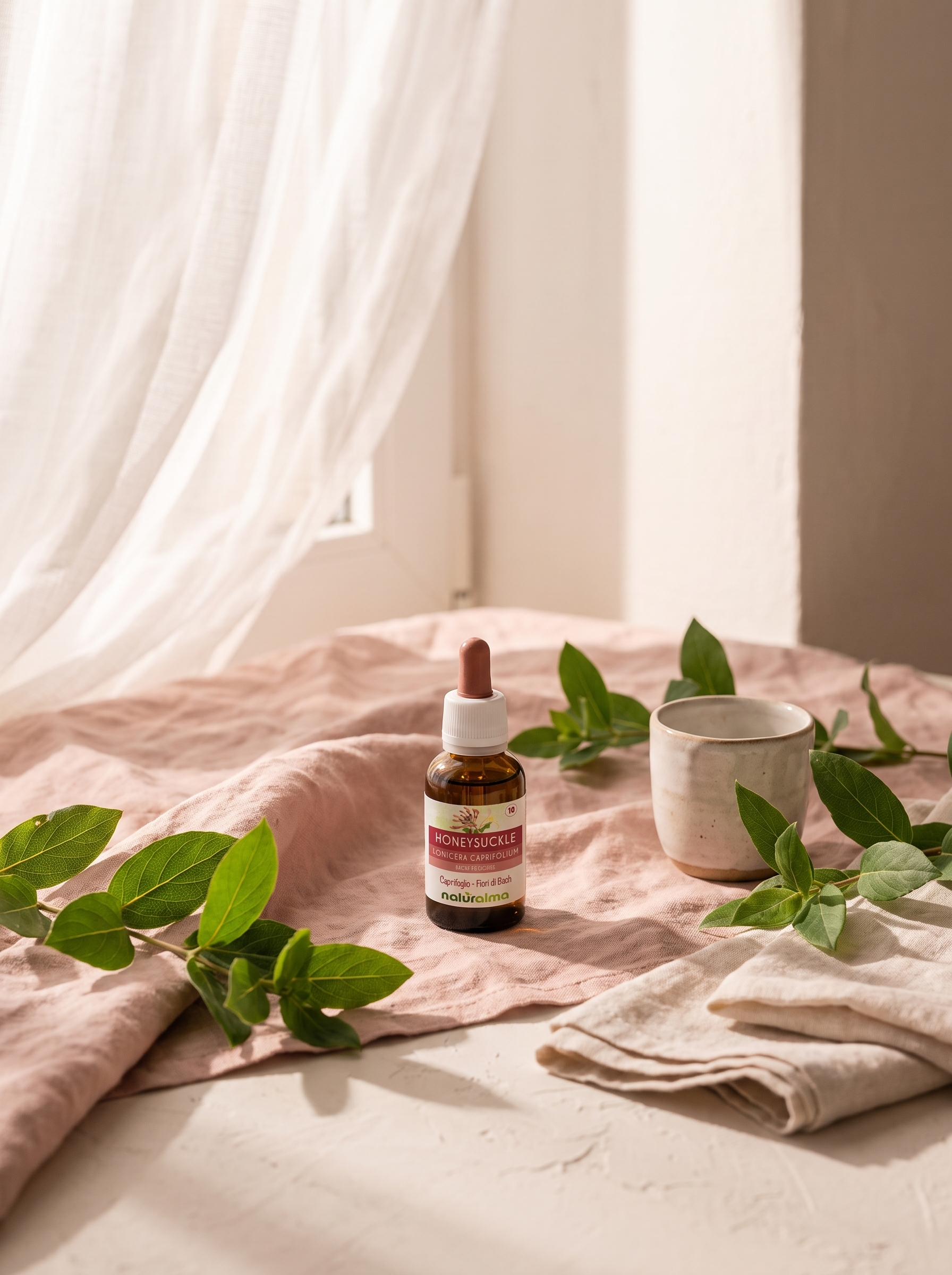
The two 30 ml bottles: which one is for you?
Naturalma makes Honeysuckle in two versions, both 30 ml, and you deserve to know the difference before anything goes in the basket.
The first is HONEYSUCKLE Fiori di bach 30 ml, and it's alcohol-free. It's the one I recommend most often, for a simple reason: it suits anyone who avoids alcohol by choice, by habit, or because there are little ones in the house. It doesn't sting under the tongue, the taste is neutral, and you don't have to think twice about taking three or four doses a day for a whole month.
The second is HONEYSUCKLE Fiori di Bach alcoolici 30 ml, and this one does contain alcohol. It's the classic preparation, the one plenty of long-time Bach flower users are used to. The alcohol is the preservative, in a tiny amount, but it's there. If you avoid it, or if the drops are for a child, go for the alcohol-free version and don't give it another thought.
Thirty millilitres, at 3-4 doses a day, comfortably covers a full cycle. So one bottle is your month sorted.
One thing though, as I always say: I'm not a doctor. Bach flowers are gentle company, not an answer to something that's been weighing on you for months. If you notice the past is taking up all the room, that you're sleeping badly, that nothing appeals, talk to your GP or another professional. The two can sit side by side, but the first doesn't replace the second.
So, do you do the late-night photo scroll? Tell me in the comments, I'm curious to know when in your day your head starts going backwards. You'll find both bottles in the shop, one click from here. See you soon!
How many drops of Honeysuckle should I take a day?
4 drops under the tongue, 2 to 4 times a day. If you prefer, put them in a splash of water and sip. There's no need to take more: with Bach flowers it's consistency that counts, not quantity.
Is there a best time of day to take it?
The evening is the one I'd tell you not to skip, because that's when your head goes backwards all by itself. A handy pattern: as soon as you're up, in the afternoon and just before bed.
How long should I take it for?
At least 3-4 weeks in a row, then take stock. A 30 ml bottle at three doses a day covers a cycle nicely. You can repeat it after a break of a few days if you want to.
How long before I notice anything?
There's no immediate effect. People usually describe small changes in the details from the second or third week: talking about the past less, feeling more curious about new things. Write down how you feel on day one and read it back a month later.
What's the difference between the alcohol-free and the alcohol version?
HONEYSUCKLE Fiori di bach 30 ml is alcohol-free, so it suits anyone who avoids alcohol and it's fine for little ones. HONEYSUCKLE Fiori di Bach alcoolici 30 ml contains alcohol as a preservative and is the classic preparation. The flower is the same, only the liquid carrying it changes.
Can children take it?
For children you go for the alcohol-free version, obviously. The drops can go in a little water. And the usual rule stands: if something is worrying you, speak to your GP or health visitor first.
Can I combine it with other Bach flowers or with a supplement?
Yes, Bach flowers are traditionally used in combination, and they won't interfere with the taste or the use of a supplement in drops or tablets. If you're on any medication, though, check with your GP first: that rule applies to everything.
 HONEYSUCKLE — Tintura madre Naturalma
search “honeysuckle fiori di bach” on naturalma.it
HONEYSUCKLE Fiori di bach 30 ml Naturalma on Amazon
or search “honeysuckle fiori di bach naturalma” on Amazon
HONEYSUCKLE — Tintura madre Naturalma
search “honeysuckle fiori di bach” on naturalma.it
HONEYSUCKLE Fiori di bach 30 ml Naturalma on Amazon
or search “honeysuckle fiori di bach naturalma” on Amazon
 Bloating, restless nights and constant sugar cravings?59 sec
 That burning feeling that creeps up after meals just won't quit?45 sec
 Stage 3 cellulite?99 sec
 My routine for a lighter, less bloated tummy, from breakfast to after dinner142 sec
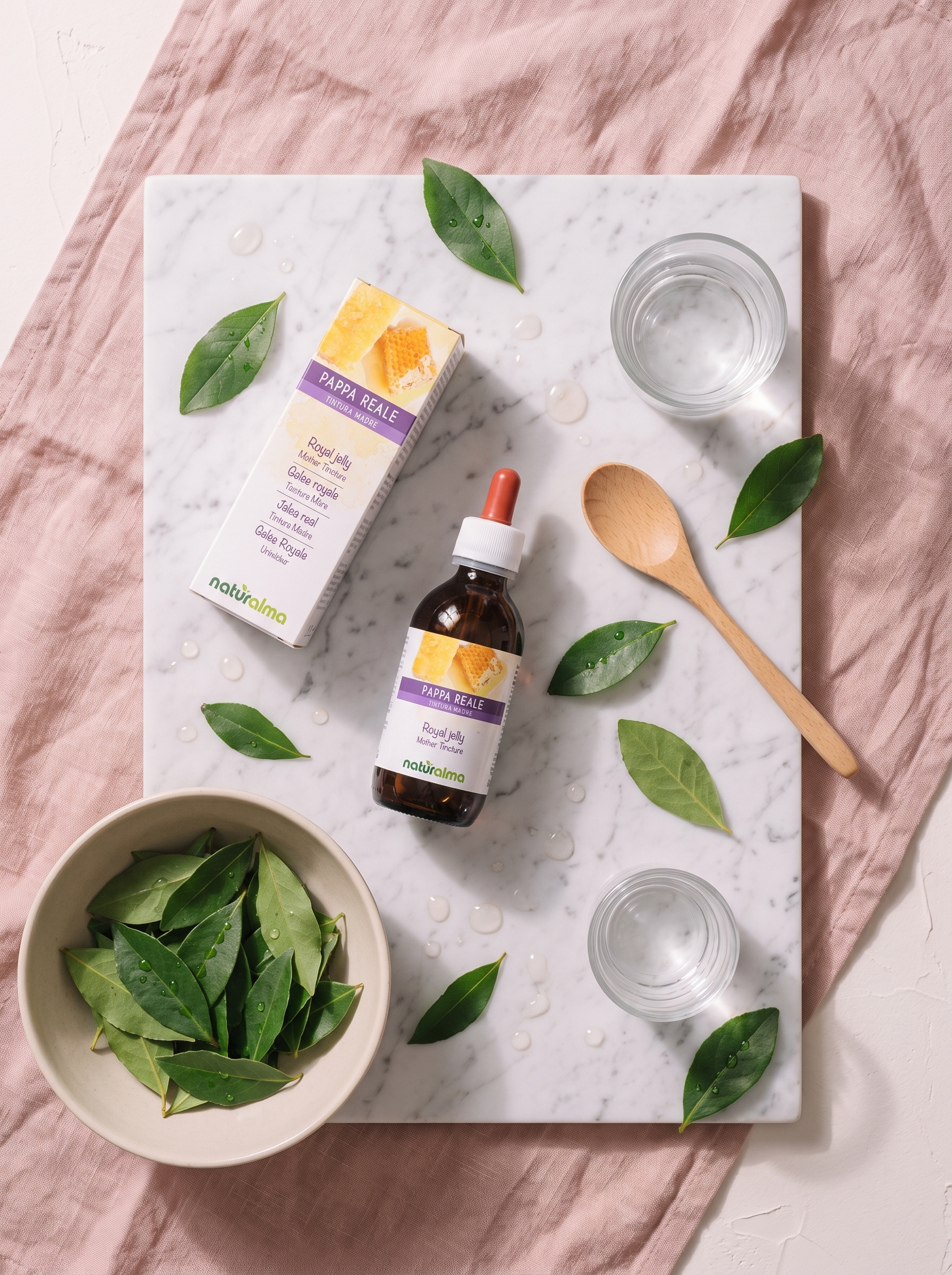
Royal Jelly: Not Coffee, and Not Judged in Three Days
Royal jelly mother tincture: 40 drops (2 ml) give you 400 mg, one to three times a day. When to take it, how long for, and whether to pick 60 or 120 ml.
Keep reading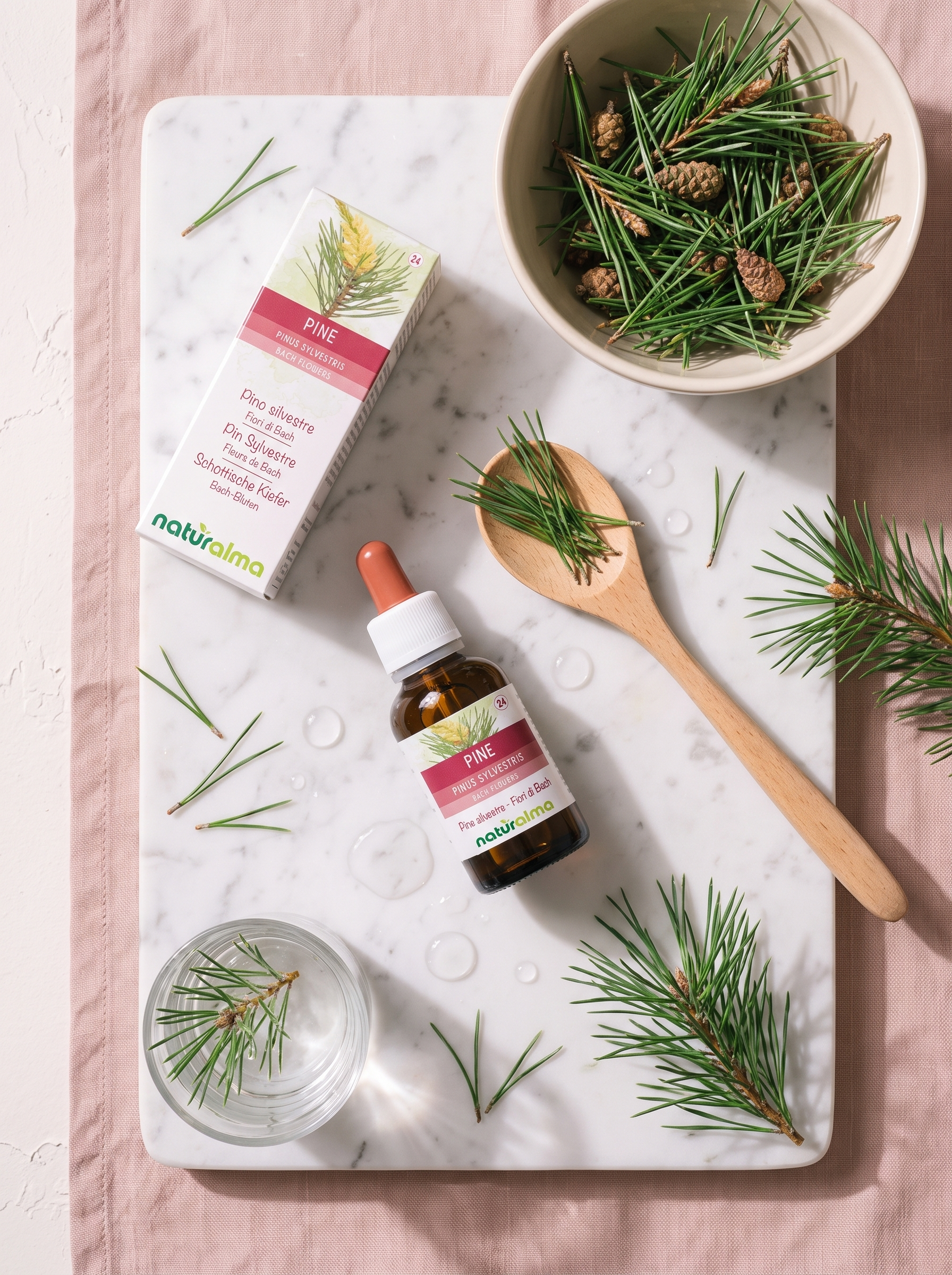
Pine Bach Flower: How Many Times Did You Say Sorry Today?
Pine is the Bach flower for people who apologise for everything, even when it isn't their fault. How many drops, when to take them and which 30 ml bottle to pick.
Keep reading