Gotu Kola: Drops Inside or Cream Outside? How to Actually Use It
 di Bianca Ioppolo · 2026-08-03 · 7 min
What gotu kola is for: cellulite doesn't start on the skin
You look at your legs in the mirror and see that slightly orange-peel texture. So what do you do? You buy the cream. Except the cream works on the surface, while the issue started a long way underneath. That's mistake number one, and I'm telling you straight away because it's the whole reason this article exists.
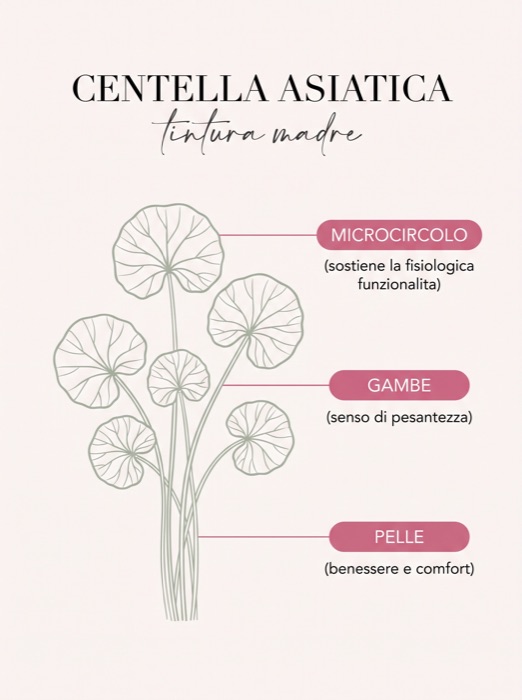
Orange-peel skin shows up on the outside, but it begins deeper down, where the microcirculation slows and fluid tends to sit. And that's exactly where today's plant comes in. A plant that studies have made famous for its compounds called triterpenes, and that herbalists use to support the normal function of the microcirculation and venous circulation. It also contributes to the wellbeing of connective tissue, the stuff that keeps skin looking firm and elastic.
Want to know which plant I mean? I'm talking about gotu kola, botanical name Centella asiatica. Yes, the one that comes up first every time you search for a leg supplement, and one of the most viral skincare ingredients of the last few years. And here's the interesting bit: gotu kola has two routes, one through your mouth and one through your skin. They don't do the same job. Let's take them one at a time.
Route one: how to take gotu kola internally
This is the route I choose when the theme is swollen, heavy legs, that feeling of everything pooling, orange-peel skin on thighs and bottom. Because if the microcirculation is the root, it makes sense to work from the inside.
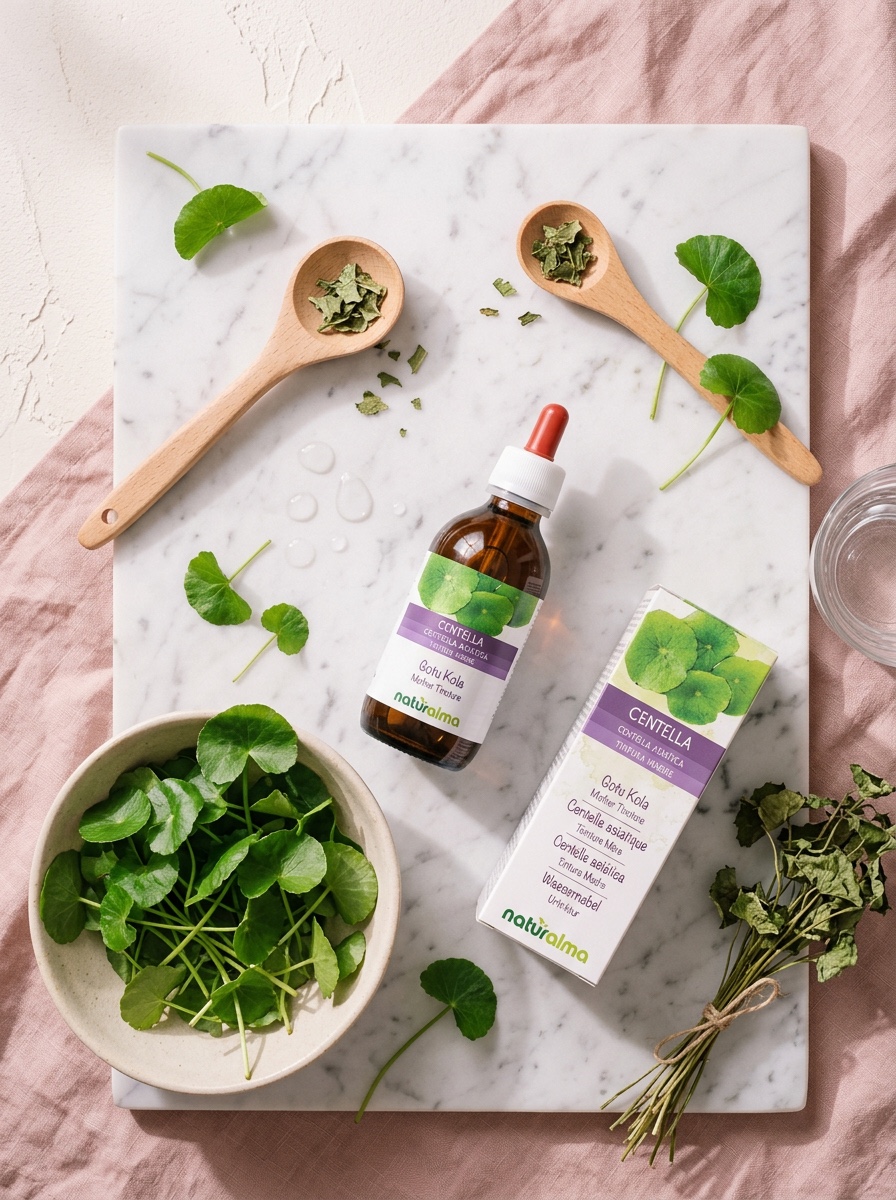
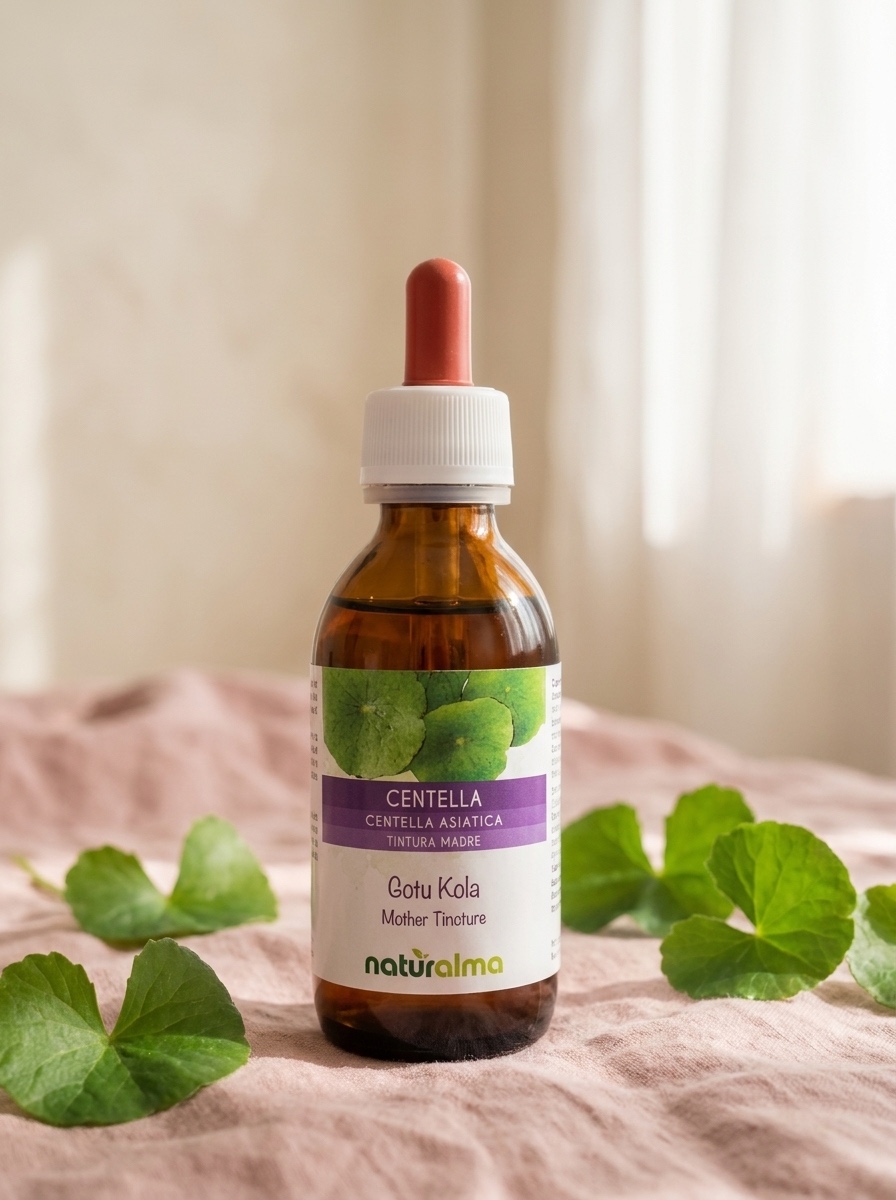
There are basically three forms you'll find in a health food shop. The alcohol-free mother tincture, the one in drops: 40 drops (about 2 ml) diluted in a glass of water, one to three times a day. No alcohol, so it suits people who avoid it. It's my favourite form because I control the dose myself and it's absorbed quickly. Then there's the mother tincture, very similar in how you use it, generally more diluted, with the number of drops given on the label. And finally tablets or capsules, usually one or two a day, brilliant if you're always rushing about and you'd only forget the drops. So: drops when you want to fine-tune the dose, tablets when you want convenience.
On the label you'll sometimes see it written as Centella asiatica: same plant, the two names just come from different traditions. And if you're wondering where it comes from, gotu kola grows wild in the wetlands of Asia, India and Madagascar, and that's exactly where the raw material behind the extracts comes from.
I'm always honest about how long it takes: this isn't a three-day thing. You're generally looking at cycles of at least 4 weeks, ideally 8, then a break. And it works far better if in the meantime you drink water, move about, and don't spend ten hours standing still or sitting at a desk without ever flexing your ankles.
Route two: gotu kola on your face and skin
Now the part you actually care about if your issue is facial skin. Because gotu kola has become the comfort ingredient par excellence: you'll find it in serums, ampoules, creams, cleansing oils and masks. It's often listed as Centella Asiatica Extract, cica or madecassoside.
On the face it's valued because it's gentle and well tolerated: it helps keep skin soft and comfortable, with a feeling of reduced redness after cold weather, wind, or a cleanse that was too harsh. It's the classic ingredient I reach for when skin is reactive, tight and flushes easily. It isn't a dramatic overnight-results ingredient: it works on calm and comfort, and you notice it over the weeks.
How to use it, in practice. Cleansing oil goes on dry skin, you massage it in, then emulsify with lukewarm water and rinse: it's the first step, not the only one. Serum or ampoule goes on freshly cleansed skin that's still slightly damp, a few drops, pressed in with your palms. Then moisturiser on top, to seal it in. Gotu kola mousse cleansers are used once a day, in the evening, if your skin is dry.
But here's the thing nobody says: cosmetic gotu kola doesn't replace the kind you take by mouth, and the other way round. If your goal is the microcirculation in your legs, a face serum is never going to reach it. If your goal is calmer facial skin, drops in a glass of water are doing a different job. So the right question isn't which of the two is better, but which issue you're trying to support.
When to take gotu kola and what to pair it with
Timing matters more than you'd think. I take the drops away from meals, usually mid-morning and mid-afternoon, with a good glass of water. Tablets, on the other hand, are often labelled to be taken before or with main meals: there, always follow what it says on the pack, because every extract is standardised differently.
One practical tip: if you pick a product that pairs gotu kola with draining herbs, don't take it late in the evening, or you'll spend the night getting up. Drainage happens during the day, when you're moving.
On combinations, the two I see people searching for most. Gotu kola and bromelain: bromelain comes from pineapple and is usually taken away from meals, so it slots neatly into the same time of day as gotu kola, and it's a classic pairing in products aimed at legs and tissues. Gotu kola with red vine leaf or horse chestnut, on the other hand, is the typical combination when the main feeling is swollen, heavy legs by the evening. So: gotu kola and bromelain when you're thinking about tissue and pooling, gotu kola and red vine leaf when it's your legs that feel like lead.
Gotu kola cautions: thyroid, pregnancy, medication
A word of caution though, because gotu kola is a gentle plant but it isn't for everyone. It isn't taken as a supplement in pregnancy or while breastfeeding, and that goes for both the drops and the tablets. In sensitive people it can cause a bit of stomach upset or, very rarely, a skin reaction when used externally: which is why, with a new cosmetic, it's worth patch-testing on a small area first.
I get a huge number of questions about the thyroid. Gotu kola isn't a plant that acts on thyroid function, so the most common worry generally isn't about the plant itself. The real point is something else: plenty of products on the market don't contain only gotu kola, they blend it with seaweeds such as bladderwrack, and seaweeds bring iodine. That's why I always tell you to turn the pack over and read the full ingredients list. If you have thyroiditis, an underactive thyroid, or you take levothyroxine, take that list to your GP before you start.
The same rule applies if you take blood-thinning medication, if you have liver problems, or if you're already following a treatment for circulation. And as I always say, I'm not a doctor: for anything serious you need a professional who can look at your situation, not the generic one described in an article online.
That said, thankfully nature gives us plants like this one, which sit nicely alongside our daily habits without promising miracles. So, is it heavy legs in the evening for you, or is your issue more about facial skin that flushes? Tell me in the comments, I'm genuinely curious to know which of the two routes you need. And as always, you can buy gotu kola directly from here, by clicking the little orange basket icon. Bye and thank you!
How do you use and take gotu kola?
It has two completely different uses. Internally, as a supplement: 40 drops of extract in a little water, once or twice a day, or tablets and capsules as per the label, usually one or two a day. Externally, as a cosmetic: serum, ampoule or cream on cleansed skin, morning and evening. If your goal is your legs and the microcirculation, route one is the one you want.
What time of day should I take gotu kola?
I take the drops away from meals, mid-morning and mid-afternoon. Tablets are often labelled to be taken before main meals: there, always follow the pack. One tip: if the product also contains draining herbs, avoid taking it late in the evening or you'll be up in the night. Drainage happens during the day, when you're walking and moving.
What does gotu kola do for skin and for the face?
In cosmetics gotu kola is valued because it's gentle and helps keep skin soft, comfortable and less flushed after cold, wind or an over-harsh cleanse. You'll see it listed as cica, madecassoside or Centella Asiatica Extract. It isn't an instant-effect ingredient: it works on skin comfort over a matter of weeks.
Does gotu kola affect the thyroid?
Gotu kola in itself isn't a plant that acts on thyroid function. The issue is usually something else: many supplements blend it with seaweeds such as bladderwrack, which bring iodine, and that does matter if you have thyroiditis or take levothyroxine. So turn the pack over, read every ingredient, and show the list to your GP before you start.
Gotu kola drops, mother tincture or tablets: which is best?
Drops of alcohol-free mother tincture are my favourite, because you control the dose and absorption is quick. The mother tincture works in a similar way, with the number of drops given on the label. Tablets are the practical choice, ideal if you're always on the go. So: drops for precision, tablets for convenience.
Are gotu kola and Centella asiatica the same plant? And how do you say it?
Yes, gotu kola is simply another name for Centella asiatica; it comes from the Indian and Ayurvedic tradition. You say it GO-too KO-la, with the stress on the first syllable of each word. It grows wild in the wetlands of Asia, India and Madagascar, and that's where the raw material for the extracts you find in the shops comes from.
Can I take gotu kola in pregnancy or while breastfeeding?
No, it isn't taken as a supplement in pregnancy or while breastfeeding, neither in drops nor in tablets. During these periods every choice should be made with your midwife or GP. As I always say, I'm not a doctor: for delicate situations you need to speak to a professional.
 Centella — Tintura madre Naturalma
search “gotu kola” on naturalma.it
Gotu Kola alcohol-free mother tincture 120 ml Naturalma Naturalma on Amazon
or search “gotu kola naturalma” on Amazon
Centella — Tintura madre Naturalma
search “gotu kola” on naturalma.it
Gotu Kola alcohol-free mother tincture 120 ml Naturalma Naturalma on Amazon
or search “gotu kola naturalma” on Amazon
 Bloating, restless nights and constant sugar cravings?59 sec
 That burning feeling that creeps up after meals just won't quit?45 sec
 Stage 3 cellulite?99 sec
 My routine for a lighter, less bloated tummy, from breakfast to after dinner142 sec
Royal Jelly: Not Coffee, and Not Judged in Three Days
Royal jelly mother tincture: 40 drops (2 ml) give you 400 mg, one to three times a day. When to take it, how long for, and whether to pick 60 or 120 ml.
Keep reading
Pine Bach Flower: How Many Times Did You Say Sorry Today?
Pine is the Bach flower for people who apologise for everything, even when it isn't their fault. How many drops, when to take them and which 30 ml bottle to pick.
Keep reading