Black Cohosh: How Long Before You Notice a Difference?
 di Bianca Ioppolo · 2026-08-11 · 6 min
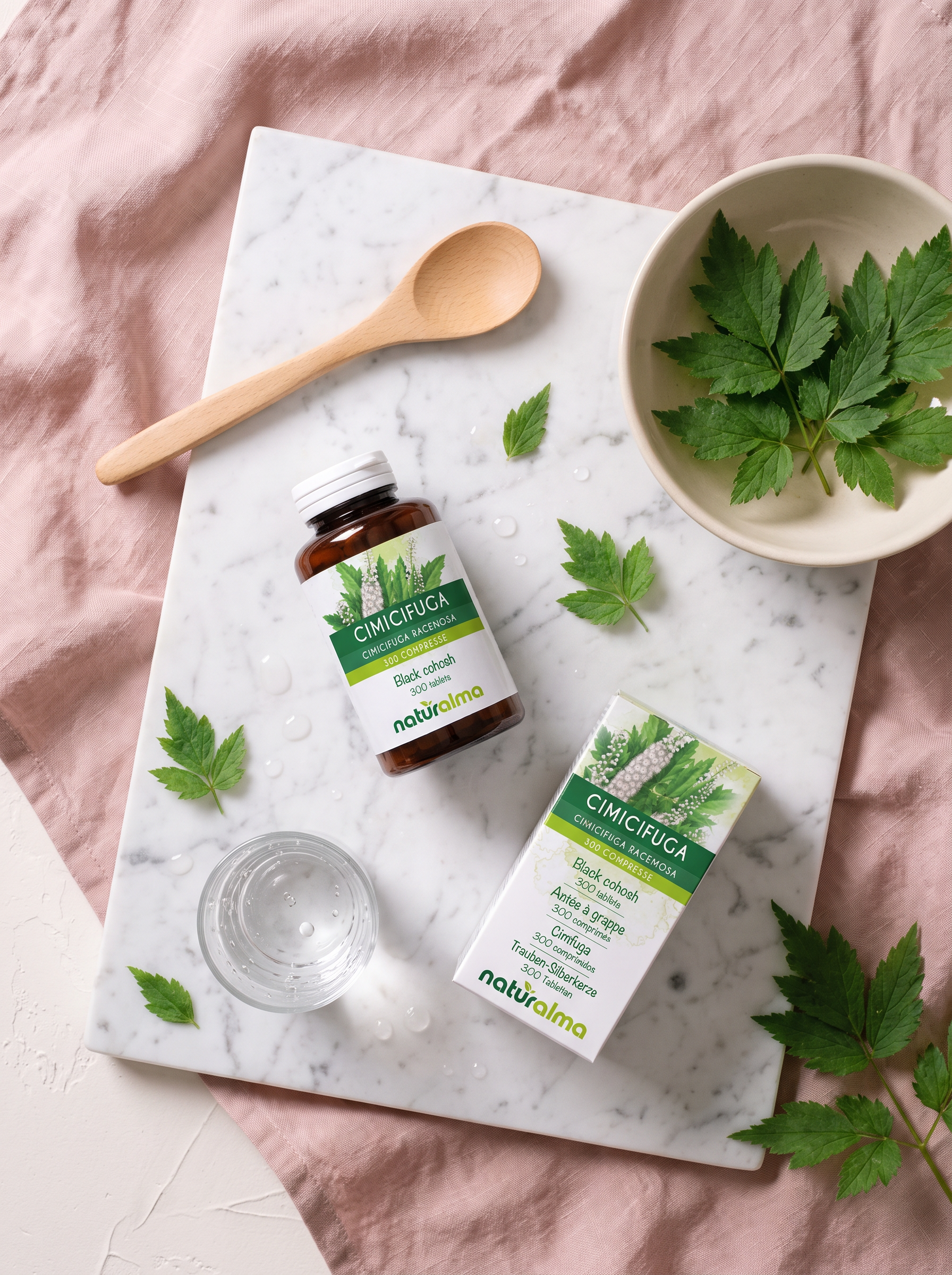
You took it for ten days, then the bottle ended up behind the vitamins, didn't it?
It happens constantly. And it's the number one reason a woman writes to me saying "it did nothing for me".
Ten days. Sometimes barely a week. Then the bottle slides to the back of the bathroom cabinet, and you find it months later, out of date, while you're digging around for a plaster.
Here's the thing: this plant doesn't work like a painkiller. It's not something you take at nine in the evening and by half past something has shifted. It works slowly, in an almost boring way, and it asks for time. How much time, though, I can't give you as one number that holds for every woman. There's no date circled on the calendar where it suddenly "switches on". I'll explain why in a moment, and how to think about it without kidding yourself and without giving up on day one.
First, let me tell you which root we're actually talking about, because its story is genuinely lovely.
Want to know which plant this is? It comes from the woodlands of North America
I'm talking about black cohosh. On labels you'll also see it written as Cimicifuga racemosa, or Actaea racemosa — same plant, don't let the three names throw you.
It grows in the woodlands of North America, and the part that's used isn't the flower: it's the root. Native American communities knew it very well and used it for nerviness, for rheumatic aches, for period pain and to support women through childbirth.
In the nineteenth century it crossed over to Europe, and it became above all a plant of women's wellbeing: traditionally it was used for cramping, for irregular cycles and for the menopausal years.
And that's exactly why nearly everyone looks for it today: hot flushes, sweating, irritability, that sleep that always breaks at the same hour. Black cohosh is used to accompany that stage of life. It doesn't switch it off like a light. It walks alongside it. The whole difference sits right there, and it's the reason patience is part of the deal.
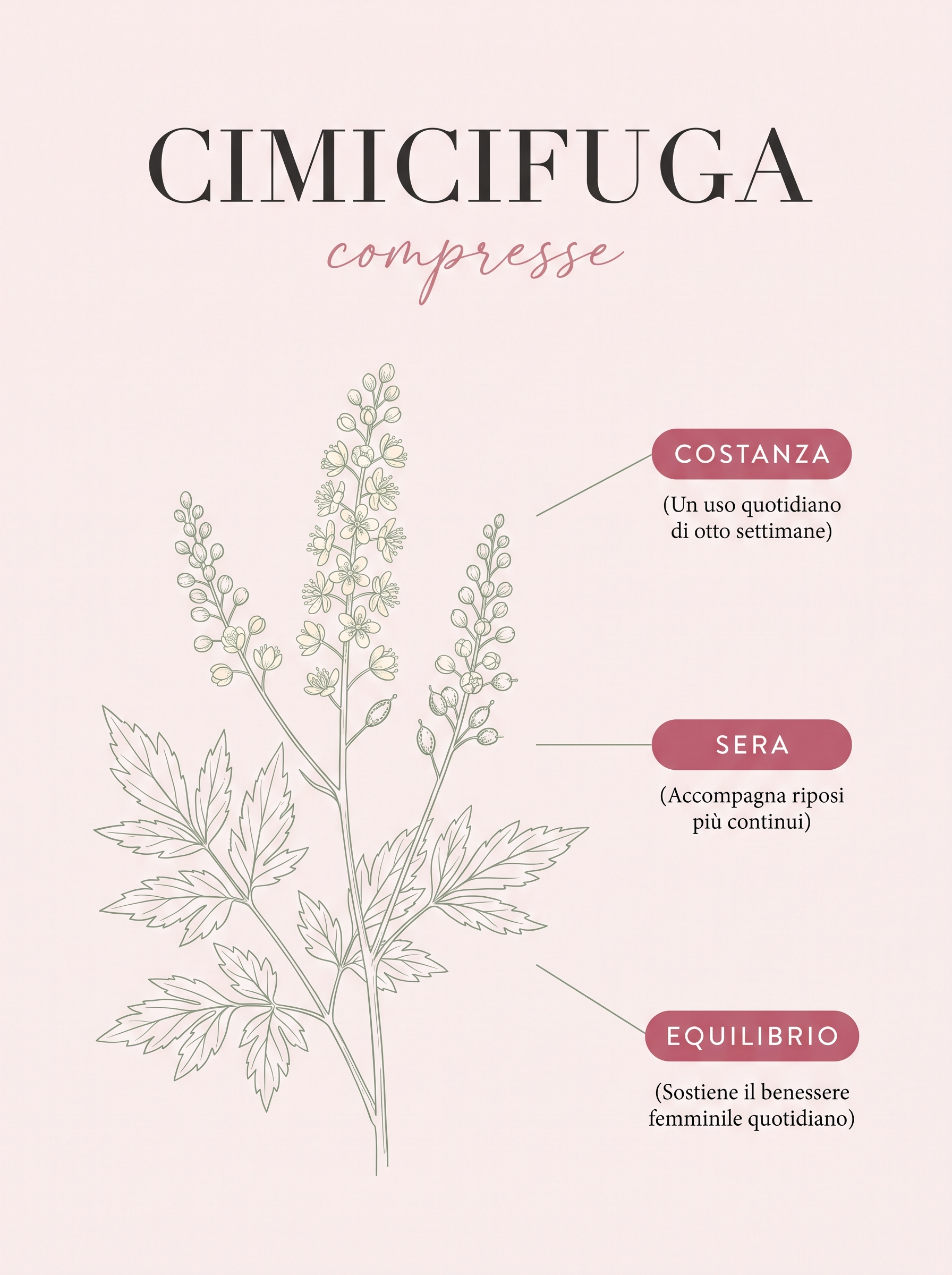
Now the part nobody tells you: the first few days tell you nothing
I'll say it the way I'd say it to a friend sitting across the kitchen table, no dancing around it.
At the start, you most likely won't notice a thing. That's normal. You're not doing it wrong, and you don't need to take more. You've simply started.
Further along, some women tell me something has shifted, and it's almost never the flush vanishing all at once. It's the evening becoming a little more manageable. It's the irritation building a bit less over the same thing that used to have you out of your chair. And some women tell me nothing has changed at all. There's no shared timetable, and anyone who tells you "by week X this happens" is just selling you something.
When to stop and take stock isn't mine to decide from here: agree that with your GP or with a herbalist you trust, based on your own situation. That's the moment for the honest question — taken every day, no gaps, has anything actually changed? If the answer is no, it's perfectly fine to say "this isn't my plant" and talk it through with them.
There's only one real rule: consistency matters more than the dose. Taking 3 for four days and then nothing for three is worth less than taking 2 every single day. If you keep forgetting, park the bottle in the bathroom next to your toothbrush — it's the one place you stand twice a day without thinking about it.
And one very practical tip: jot down on a scrap of paper, even just as ticks, how many times you wake in the night this week. In a month's time you won't remember. And without a written starting point it's almost impossible to tell whether something genuinely shifted or you're imagining it.
Tablets or mother tincture? It comes down to your day, then to how long the bottle lasts
The choice is simpler than it looks, because really it hangs on two things.
The tablets. They come in a 120-tablet pack (60 g) and a 300-tablet pack (150 g). They're the convenient option: they live in your handbag, there's nothing to measure or dilute, you take them with a glass of water and you're done. At 2 a day, the 120 pack covers you for roughly two months. The 300 pack comfortably reaches four to five months — that's the one women choose once they've already tried it and know they want to keep going.
The mother tincture. You'll find it in 60 ml, 120 ml and 200 ml bottles. It's alcohol-free, like the tablets, so that isn't the deciding factor here. What it gives you is finer control over the dose, and it's a good call if swallowing tablets bothers you. Always dilute it in a little water, following the amount stated on your bottle.
On how long each one lasts, think of it this way: 60 ml is a small size, useful for working out whether taking it this way suits you, not for covering a long stretch. The 120 ml and the 200 ml are the ones that let you keep going without running dry halfway through. And running dry halfway, with this plant, is the surest way to learn nothing at all.
The number you need, in one line: 2-3 tablets a day, or the dose on the label of the mother tincture in a splash of water. The label on your own pack always overrules me.
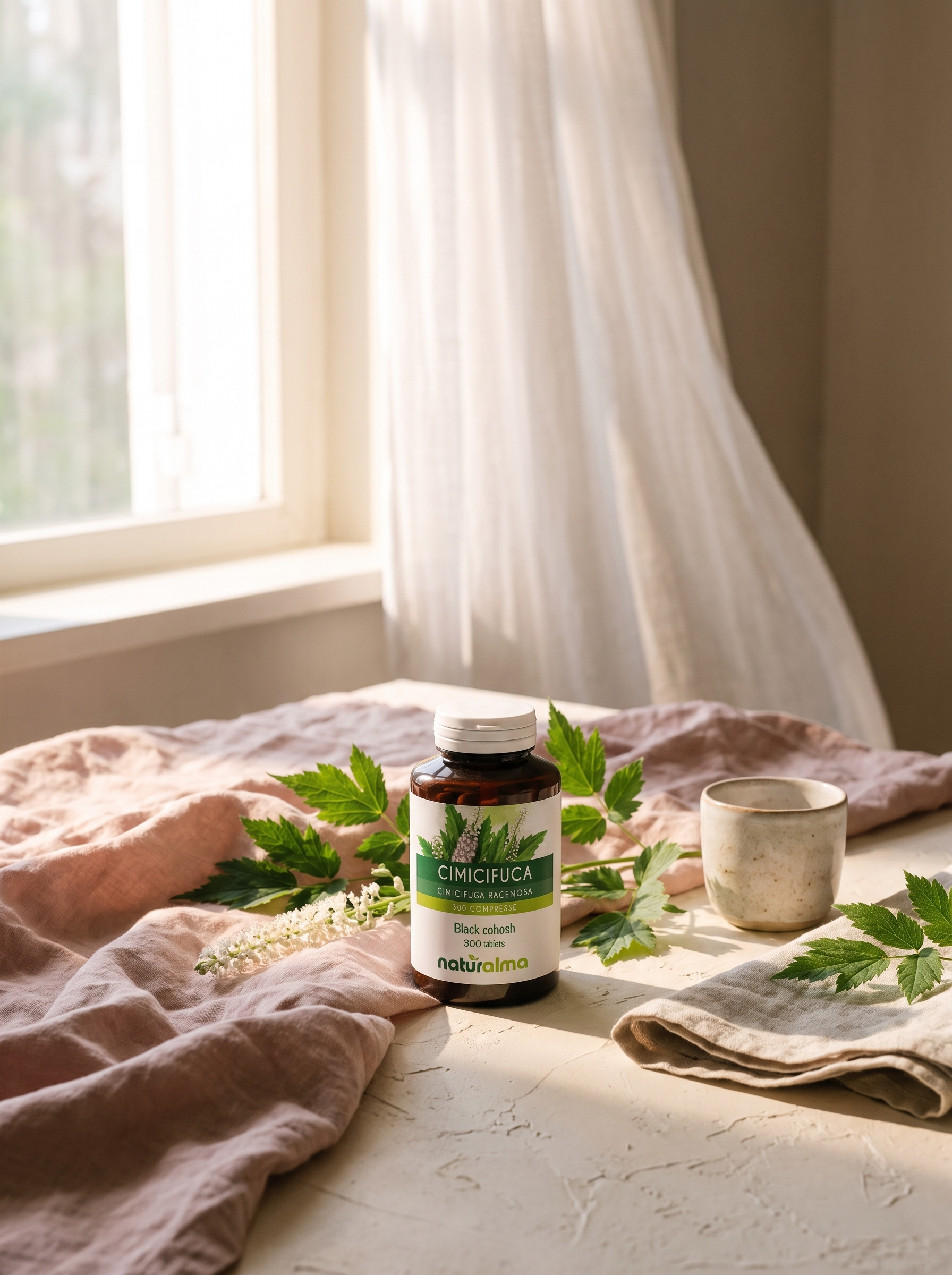
One important thing: some women should speak to a GP first
As I always say, I'm not a doctor. And with black cohosh caution matters more than with most plants, so I'll put it plainly.
Not in pregnancy and not while breastfeeding. Not for teenagers. And if you're on any course of treatment, any at all, or you're having liver checks, don't start black cohosh on your own: talk to your GP first. The same goes if you have hormonal matters already being looked after by a specialist.
If something turns up while you're taking it that doesn't feel right — even just odd digestion or a new tiredness — stop and ask. There's no point pushing on to see if it settles.
And if the discomfort carries on regardless, that's the moment to speak to your GP, not to increase the dose by yourself. I'm strict about that one.
One last thing about combining. If you're already taking other supplements, don't start everything on the same day. Bring black cohosh in on its own for a while. That way, if something shifts or something bothers you, you know what to credit and what to blame. It's an obvious trick and nobody does it.
Now tell me: how many days in a row did you manage before you let it slide? Write and let me know — I'm genuinely curious whether you kept going for a few weeks or the bottle is still sealed in a drawer.
How many black cohosh tablets should I take a day?
The reference dose is 2-3 tablets a day with a glass of water. If you're starting now, begin with 2 and stay there for the first fortnight — there's plenty of time to go up. Always check the label on your own pack, whether that's the 120 or the 300 tablets.
And the mother tincture — how do I take it?
Always dilute it in a little water, in the amount stated on the bottle label, once or more a day. Don't take it neat: the root has a strong taste. It's alcohol-free, so that's not something you need to weigh up.
Is it better in the morning or the evening?
If the discomfort is mostly at night — sweating and waking up — many women take one dose mid-afternoon and one after dinner. If it's daytime irritability that weighs on you, split it between morning and evening. The timing matters less than the consistency: not skipping days is what actually makes the difference.
How long can I keep taking it?
A sensible trial run is 8 consecutive weeks. If you get on well with it you can carry on for a few months with breaks in between, but at that point you agree the length with your GP or your herbalist — you don't just keep going indefinitely on your own.
What's the real difference between the tablets and the mother tincture?
Two things, and neither of them is alcohol — both are alcohol-free. First: the tablets are easier to carry in your bag and have no taste. Second: the tincture lets you fine-tune the dose. Beyond that, choose based on your actual day, not on theory.
Who shouldn't take it?
Anyone pregnant or breastfeeding, teenagers, and anyone on a course of treatment or having liver checks: in those cases speak to your GP first. If any reaction turns up that doesn't feel right, stop and ask.
Can I take it alongside other supplements?
Generally yes, but don't start everything on the same day. Take black cohosh on its own for a fortnight, so you can see what it does. And if you're on medication, your GP judges the combination — not me, and not the label.
 Cimicifuga — Tintura madre Naturalma
search “black cohosh tablets” on naturalma.it
CIMICIFUGA 300 tablets (150 g) Naturalma on Amazon
or search “black cohosh tablets naturalma” on Amazon
Cimicifuga — Tintura madre Naturalma
search “black cohosh tablets” on naturalma.it
CIMICIFUGA 300 tablets (150 g) Naturalma on Amazon
or search “black cohosh tablets naturalma” on Amazon
 Bloating, restless nights and constant sugar cravings?59 sec
 That burning feeling that creeps up after meals just won't quit?45 sec
 Stage 3 cellulite?99 sec
 My routine for a lighter, less bloated tummy, from breakfast to after dinner142 sec
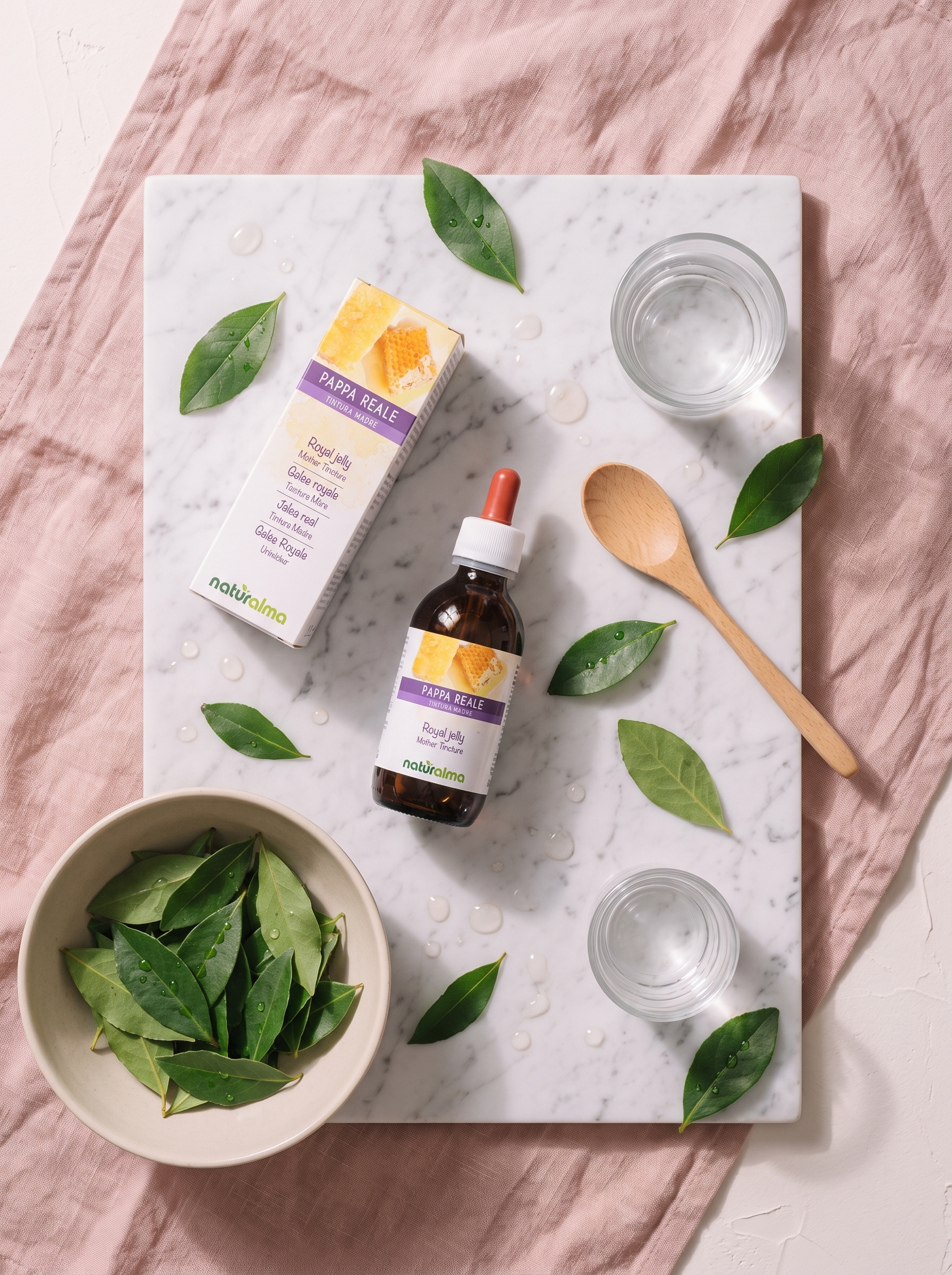
Royal Jelly: Not Coffee, and Not Judged in Three Days
Royal jelly mother tincture: 40 drops (2 ml) give you 400 mg, one to three times a day. When to take it, how long for, and whether to pick 60 or 120 ml.
Keep reading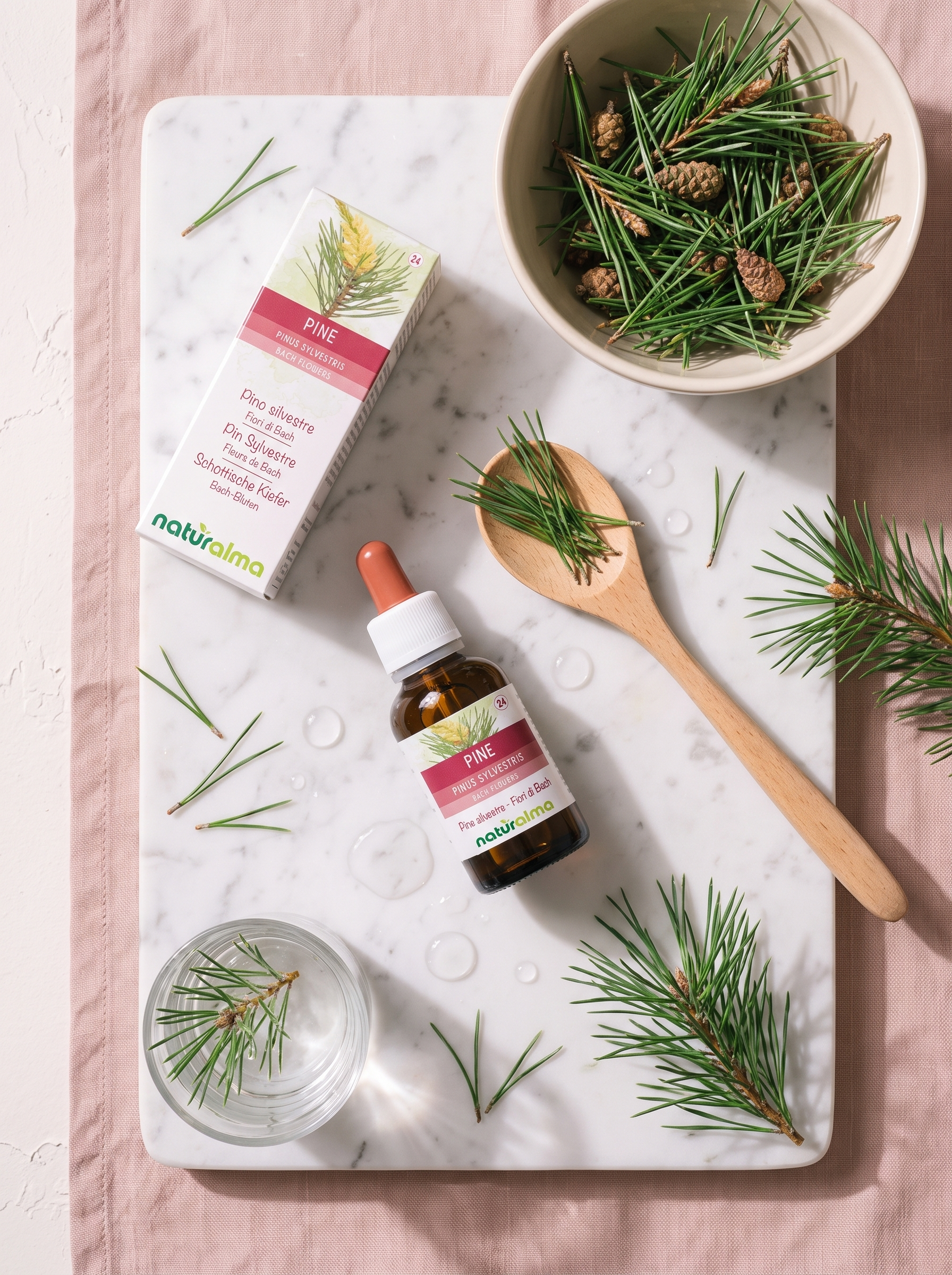
Pine Bach Flower: How Many Times Did You Say Sorry Today?
Pine is the Bach flower for people who apologise for everything, even when it isn't their fault. How many drops, when to take them and which 30 ml bottle to pick.
Keep reading