Absinthe or Grand Wormwood: Take It Before Meals
 di Bianca Ioppolo · 2026-08-07 · 6 min
Do you get up from the table feeling like you've swallowed a brick?
You eat a normal portion. Not Christmas dinner with all the trimmings, a normal portion. And half an hour later there you are, stomach like wet cement, no energy for anything.
Or your problem is the opposite one: you sit down and you're just not hungry. You look at the plate, pick at it, get up again. And then at four in the afternoon you're standing in front of the biscuit tin with your tea.
Either way, there's a plant that European herbal tradition has been using for centuries. It's the most bitter thing on the shelf, so much so that its name has become a byword for bitterness. And here's the thing: almost everyone takes it at the wrong moment of the day. I'll explain in two minutes, with the clock in hand.
First, though, let me tell you what it does, because once you understand how it works you'll guess the right moment on your own.
Want to know which plant I mean? The most bitter one in European herbalism
I'm talking about absinthe or grand wormwood, botanically Artemisia absinthium. Its history is old and a lot less romantic than the stories suggest: it was one of the bitter plants of Greek and Roman herbalism, then medieval, then Renaissance.
Silver-grey leaves, a smell you can't miss, a taste you don't forget. Traditionally it was used as a bitter tonic, to wake up the appetite and to keep company with slow digestion, including by people who needed to build their strength back up and find their appetite again. Folk tradition also credited it with sorting out unwanted guests in the gut, and used it externally on aching muscles.
How it works, without the jargon: the bitterness isn't a flaw in the product, it's the point. When your tongue picks up that taste, your digestive system gets a signal, like someone knocking at the door before coming in. Stomach and liver get ready to work. That's why tradition files absinthe or grand wormwood under bitter tonics and not under calming plants.
So you can already see where I'm going. If the bitter taste is there to announce that food is on its way, announcing it once the plates are cleared makes very little sense.
Now the part you actually came for: 15-20 minutes before, clock in hand
Here's the most common mistake. People buy it, get up from the table feeling heavy, and that's when they reach for the drops. The way you'd have a digestif after dinner. Except this isn't an after-dinner drop: it works beforehand, in the literal sense of opening things up.
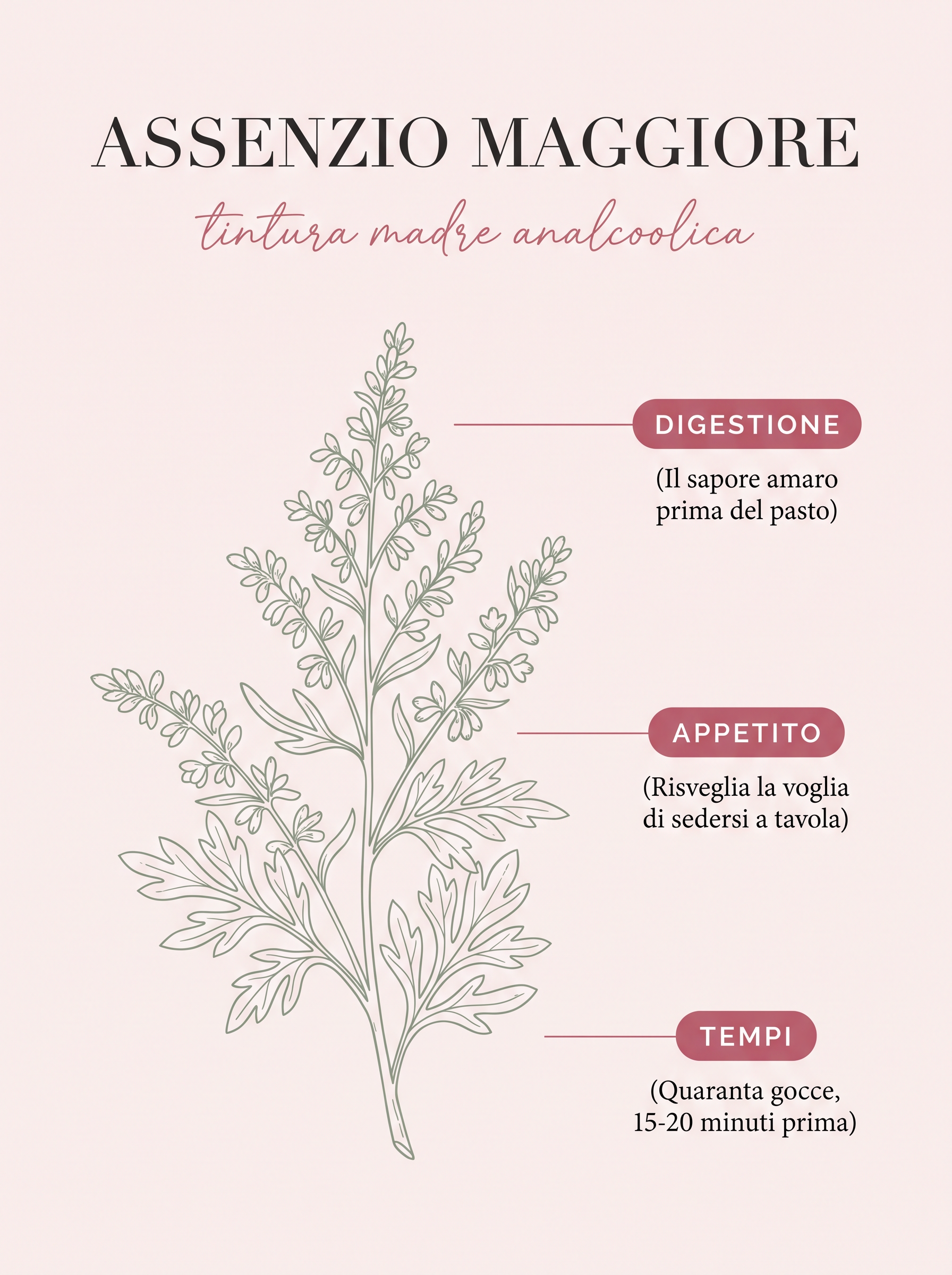
The traditional moment is 15-20 minutes before you sit down. Put the drops in a glass of water, drink it, then go and lay the table or finish that email. By the time you sit down, the work is done.
If your problem is an appetite that never shows up, do this before lunch and before dinner. If your problem is slow digestion, try it before the heaviest meal of your day, the one you already know will floor you. For most people that's the evening meal.
And the water? That's not a detail. The 40 drops go into a full glass, not straight on the tongue. First because neat, this stuff is genuinely hard to get down. Second because diluted, the bitter taste lingers in your mouth a few seconds longer, and those seconds are exactly what you want. Don't sweeten it and don't mask it: covering the bitterness means throwing away the reason you're taking it.
How many drops, how often, and which bottle actually makes sense for you
The numbers are simple. 40 drops, that's 2 ml, diluted in a glass of water, one to three times a day. The daily maximum is 120 drops, and you don't go past it. Those 40 drops contain 200 mg of absinthe or grand wormwood.
If it's your first time, start with one dose a day, before whichever meal gives you the most trouble. After a few days, if you're getting on well with it and you need more, go up to two. Three times a day is the ceiling, not the starting point.
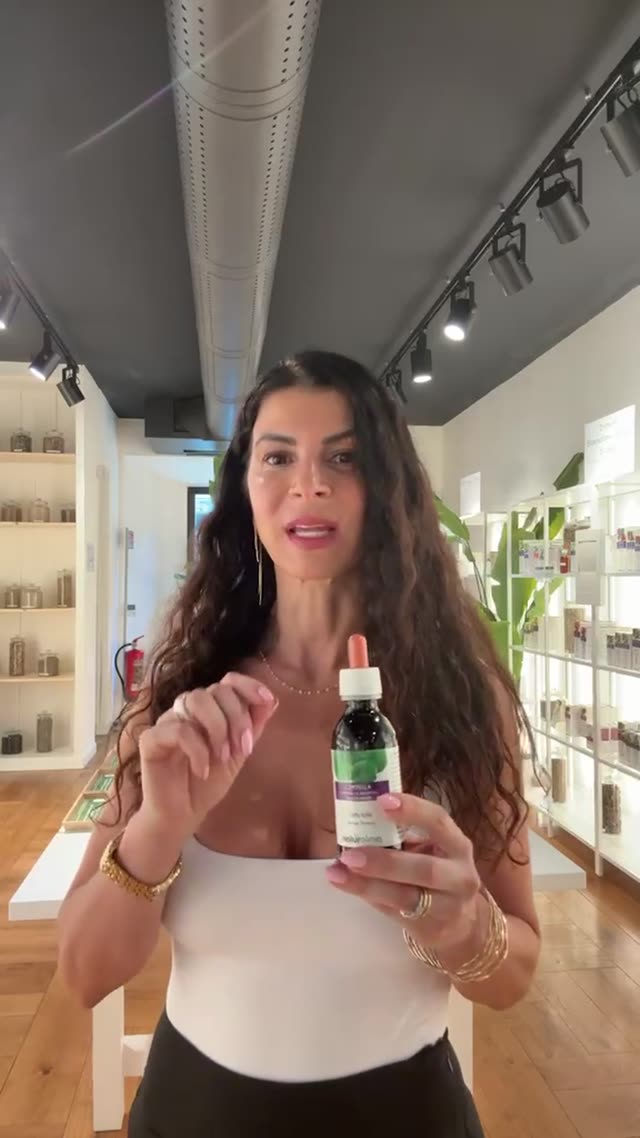
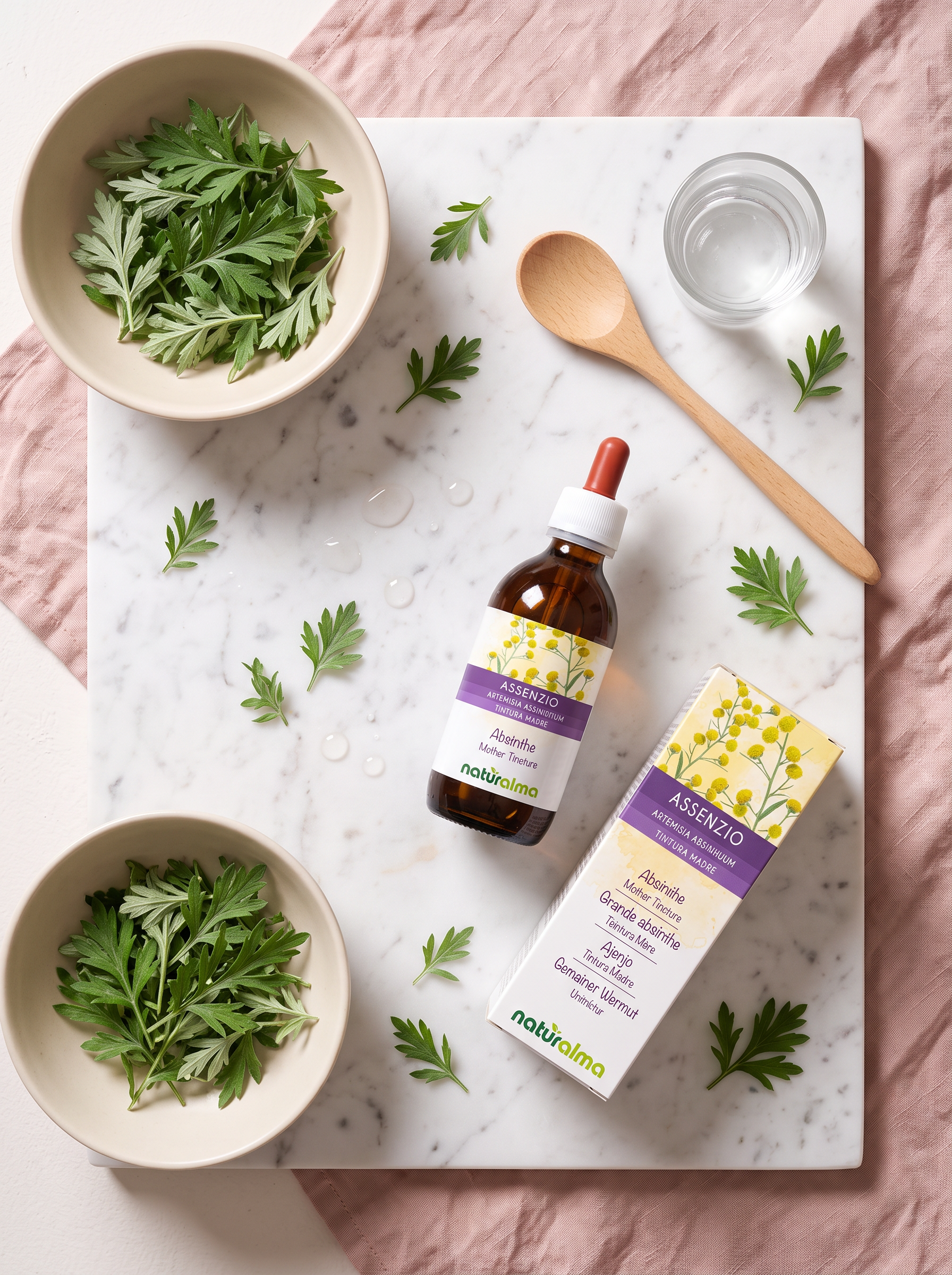
The Naturalma mother tincture comes in four sizes: 60 ml, 120 ml, 200 ml and 500 ml. The difference isn't the formula, it's how many days it lasts you. At 2 ml a day, the 60 ml covers roughly a month. The 120 ml gets you two months on one dose a day, or just under a month if you take two. The 200 ml and 500 ml make sense if there are two of you at home, or if you've already worked out this is a plant you want in the cupboard all year round. There's also a 4 fl oz bottle, which is the same 120 ml, made for overseas shelves.
My friendly advice: first time round, get the 60 ml. It is properly bitter and it isn't for everyone. Better to find that out with a small bottle than with half a litre sitting on the shelf.
For how long? Tradition uses it in courses, not all year. Three or four weeks, then a break of about ten days. If after the first course your digestion is exactly as it was, don't push on by adding drops: have a word with your doctor, because there may be something else worth looking at.
A word of caution: the list of people who should leave it alone is longer than usual
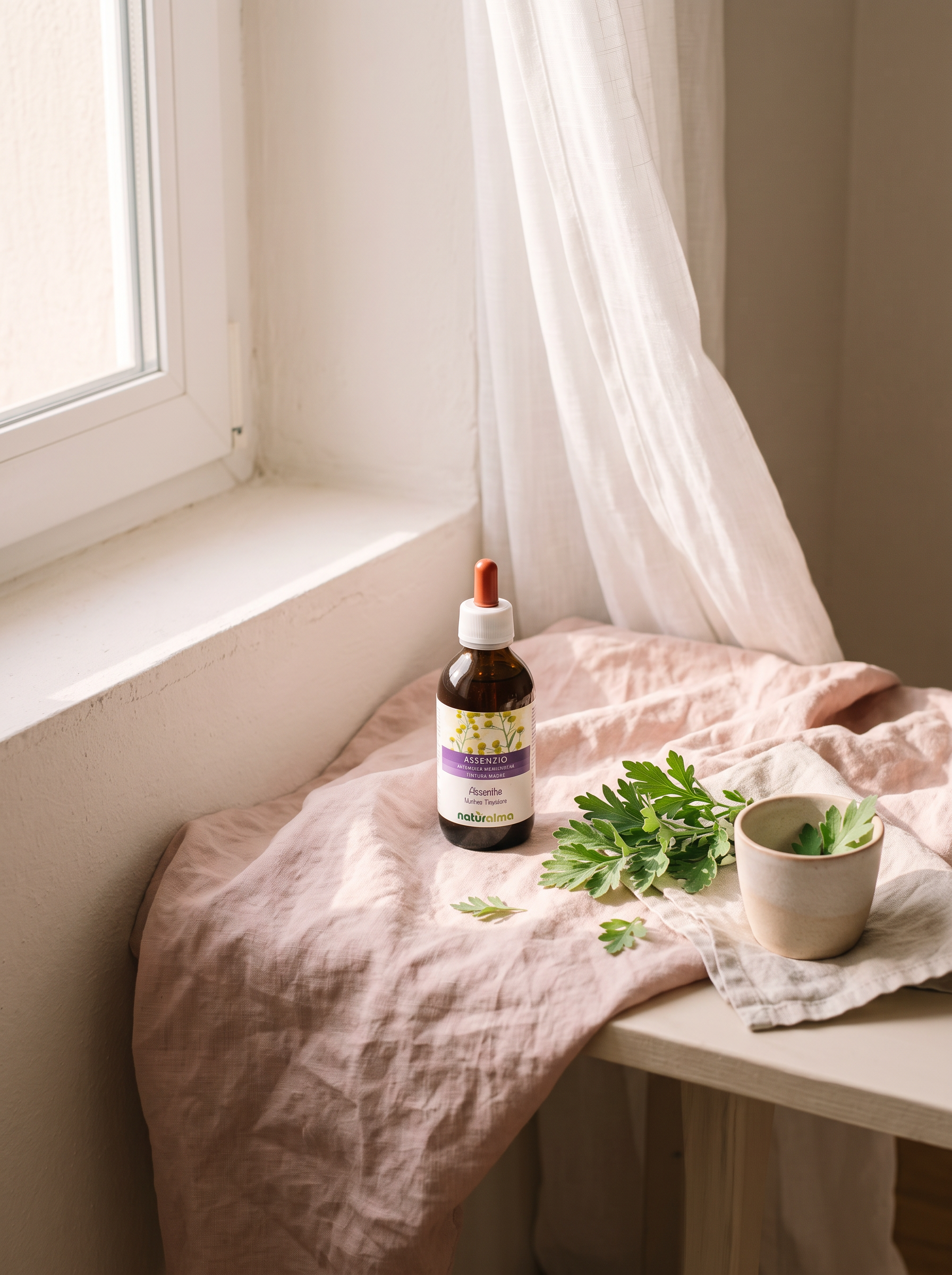
Let's start with the good news. This mother tincture is alcohol-free, like the rest of the Naturalma range, which is why people who avoid alcohol can take it too. That doesn't make it a plant for everyone, though: because of the nature of absinthe or grand wormwood, the label says in black and white that it's for adults only.
So: no children, and none of this in pregnancy or while breastfeeding. There's no room for interpretation here, it's a contraindication straight off the label.
It's also not advised if you have known cross-allergies, particularly to plants in the Asteraceae family: if you already know you react to chamomile, arnica, dandelion or ragweed, this one isn't for you. And it's not to be used if you have liver or gallbladder problems. In that case the decision isn't one you make on the internet, you make it with your doctor.
Last thing, plain common sense. If you're on any medication, if you're having treatment of any kind, or if you simply have a doubt, ask first. As I always say, I'm not a doctor: drops keep everyday wellbeing company, they don't replace anyone.
Now tell me something. Are you in the heavy stomach camp or the never hungry camp? Let me know, because the answer changes the time of day you take it, and I like hearing how you get on. As always, you'll find the product just below in the banner. Take care and thank you!
How many drops a day should I take?
40 drops, that's 2 ml, diluted in a glass of water, one to three times a day. The daily maximum is 120 drops and you shouldn't go over it. If it's your first time, start with one dose a day and see how you get on.
Before or after meals?
Before, about 15-20 minutes. It's a bitter, and the bitter taste is there to tell your digestive system that food is coming. Taking it once you've finished eating is the most common mistake: you miss out on the part that does the work.
Does the Naturalma absinthe or grand wormwood tincture contain alcohol?
No, it's alcohol-free, like the rest of the Naturalma mother tincture range. That doesn't mean it suits everybody, though: because of the nature of the plant, the product is for adults only.
How long can I take it for?
Tradition uses it in courses: three or four weeks, then a break of around ten days. It's not a plant to take all year without stopping. If the problem carries on, have a word with your doctor.
What's the difference between the 60, 120, 200 and 500 ml bottles?
Only how long they last, the formula is identical. At 2 ml a day the 60 ml covers about a month, the 120 ml about two. The bigger sizes are worth it if two of you use it or if you always keep it in the cupboard. First time, go small.
How long before I notice anything?
With that heavy feeling after meals, plenty of people notice a difference within the first few days, because it's tied to when you take it. Appetite needs more consistency: give it a full course before you judge.
Can I take it alongside other supplements?
It generally sits well with other digestive wellbeing plants, but don't stack several bitters at the same time of day: one before the meal is enough. If you're already taking something or you're on any treatment, check with your doctor first.
 Assenzio maggiore — Tintura madre Naturalma
search “absinthe grand wormwood mother tincture” on naturalma.it
ABSINTHE OR GRAND WORMWOOD Alcohol-free mother tincture 120 ml Naturalma on Amazon
or search “absinthe grand wormwood mother tincture naturalma” on Amazon
Assenzio maggiore — Tintura madre Naturalma
search “absinthe grand wormwood mother tincture” on naturalma.it
ABSINTHE OR GRAND WORMWOOD Alcohol-free mother tincture 120 ml Naturalma on Amazon
or search “absinthe grand wormwood mother tincture naturalma” on Amazon
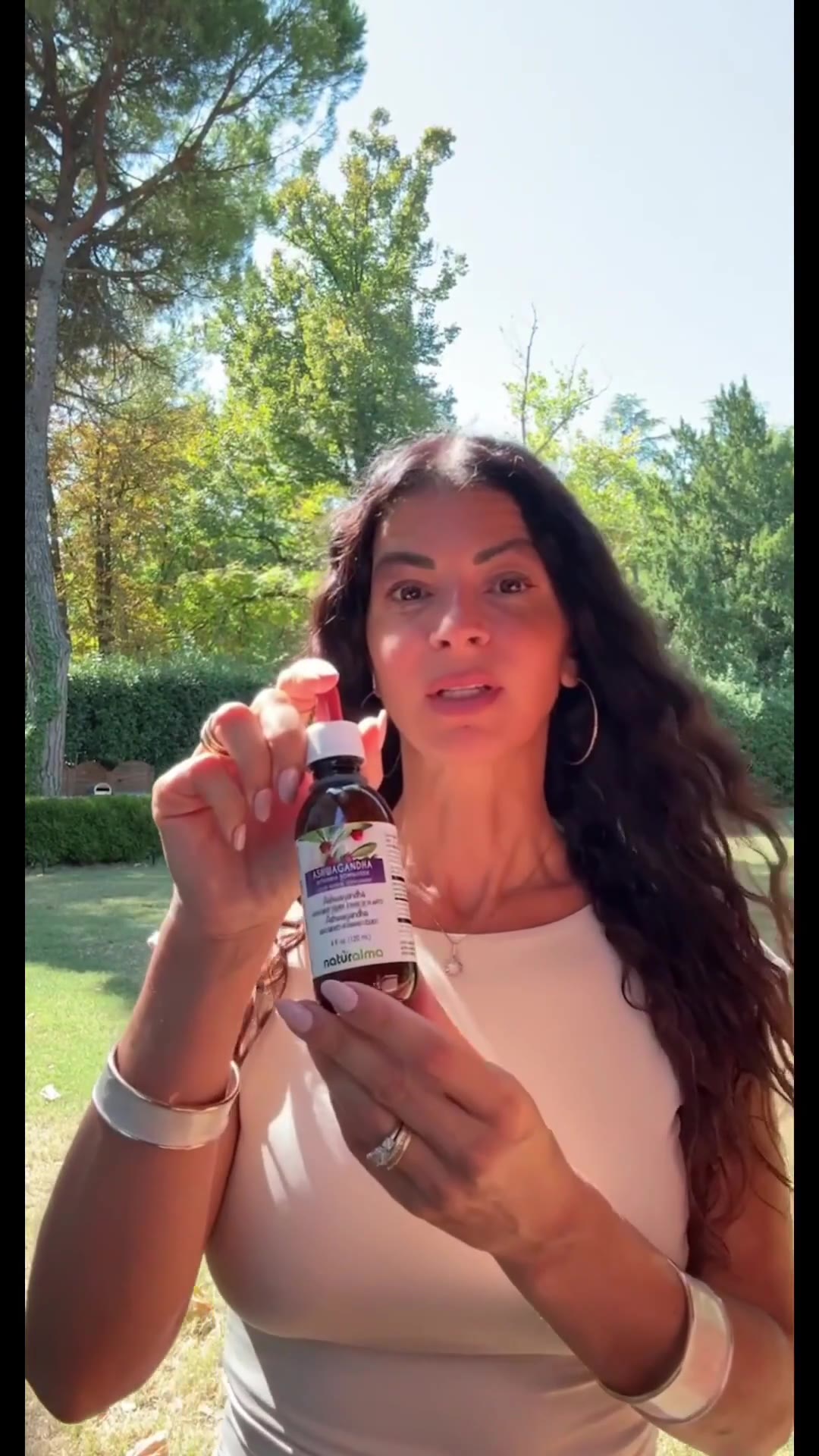 Bloating, restless nights and constant sugar cravings?59 sec
 That burning feeling that creeps up after meals just won't quit?45 sec
 Stage 3 cellulite?99 sec
 My routine for a lighter, less bloated tummy, from breakfast to after dinner142 sec
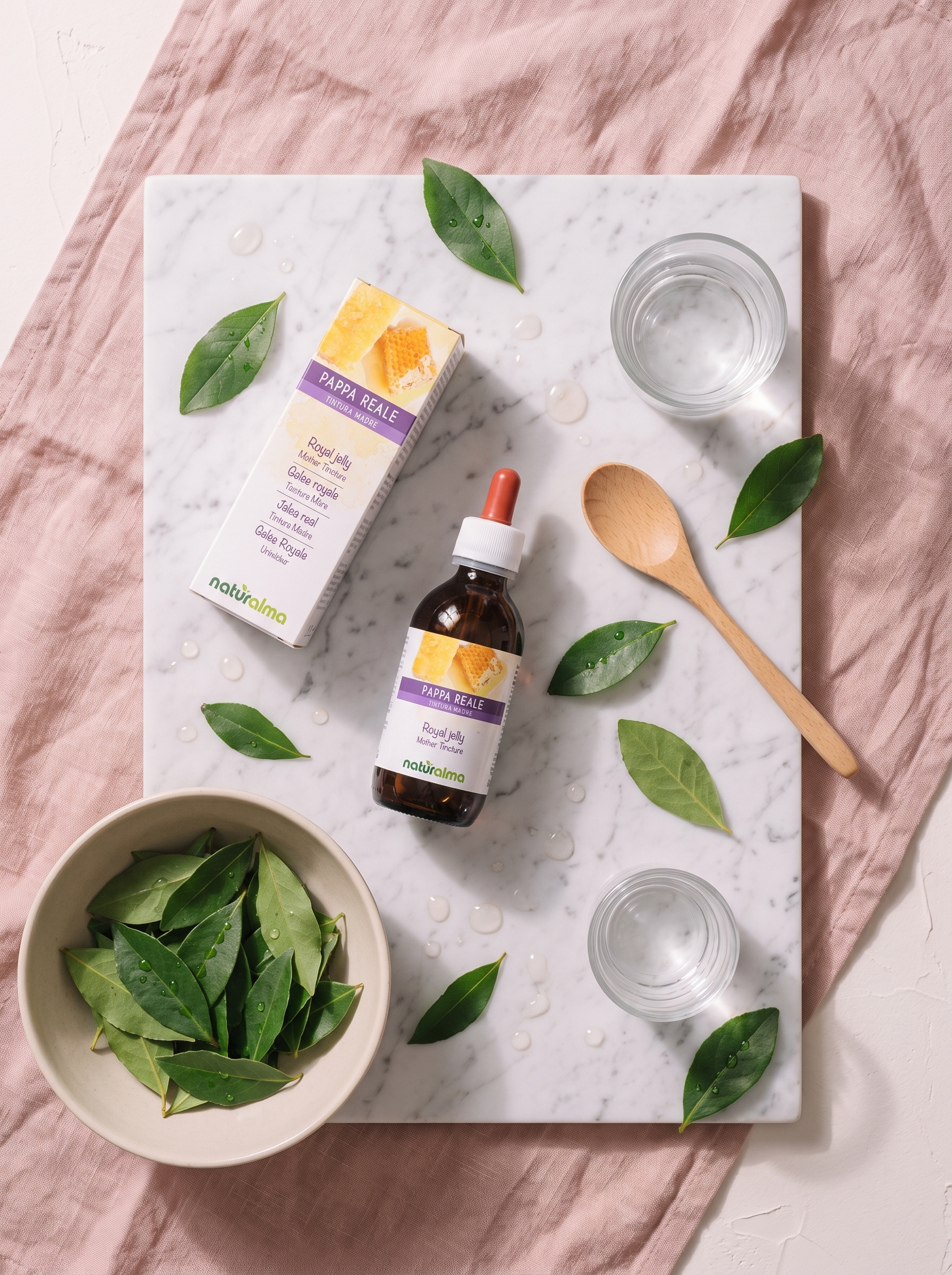
Royal Jelly: Not Coffee, and Not Judged in Three Days
Royal jelly mother tincture: 40 drops (2 ml) give you 400 mg, one to three times a day. When to take it, how long for, and whether to pick 60 or 120 ml.
Keep reading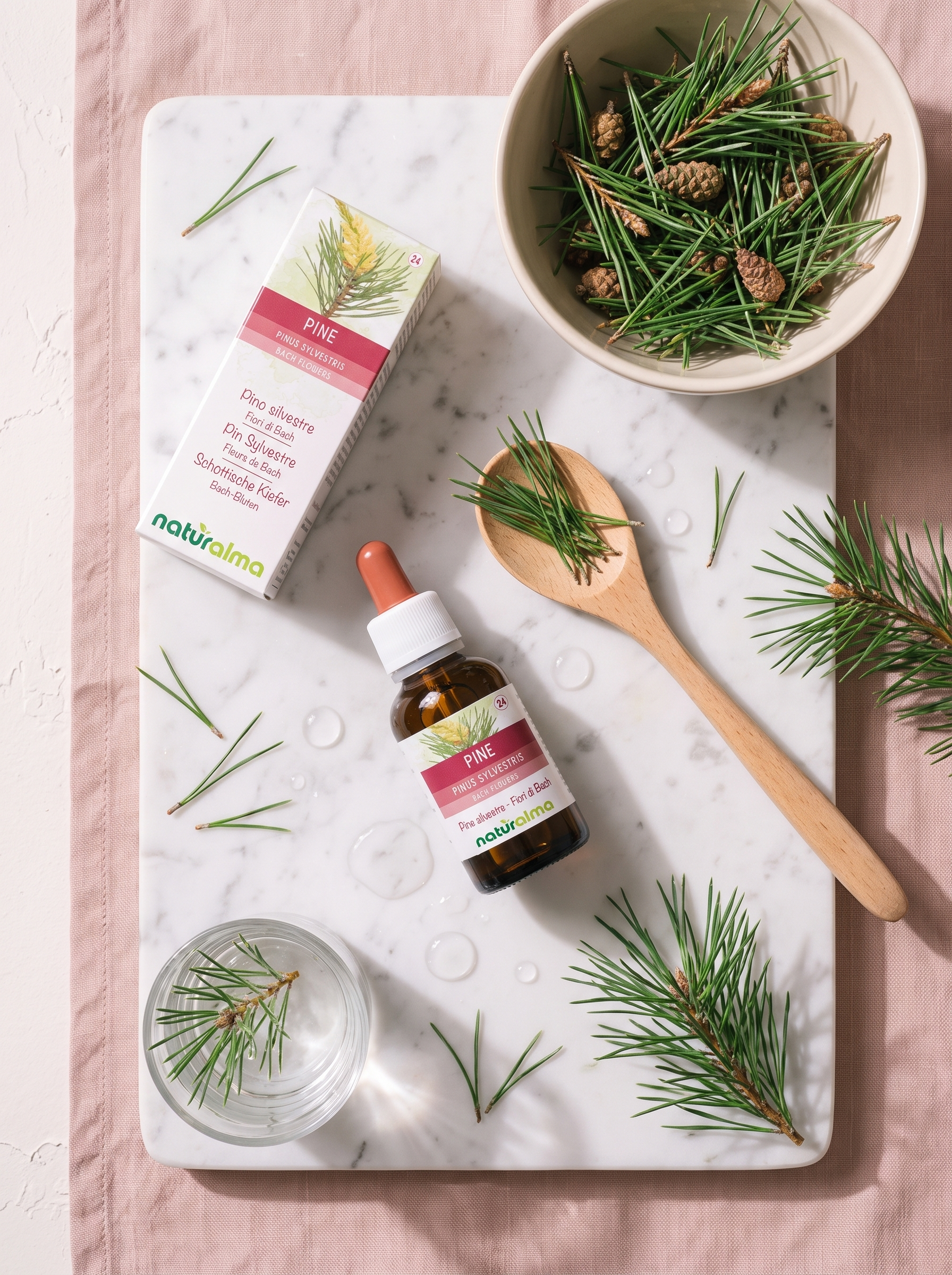
Pine Bach Flower: How Many Times Did You Say Sorry Today?
Pine is the Bach flower for people who apologise for everything, even when it isn't their fault. How many drops, when to take them and which 30 ml bottle to pick.
Keep reading