Poria cocos drops: why evening beats morning
 di Bianca Ioppolo · 2026-08-07 · 7 min
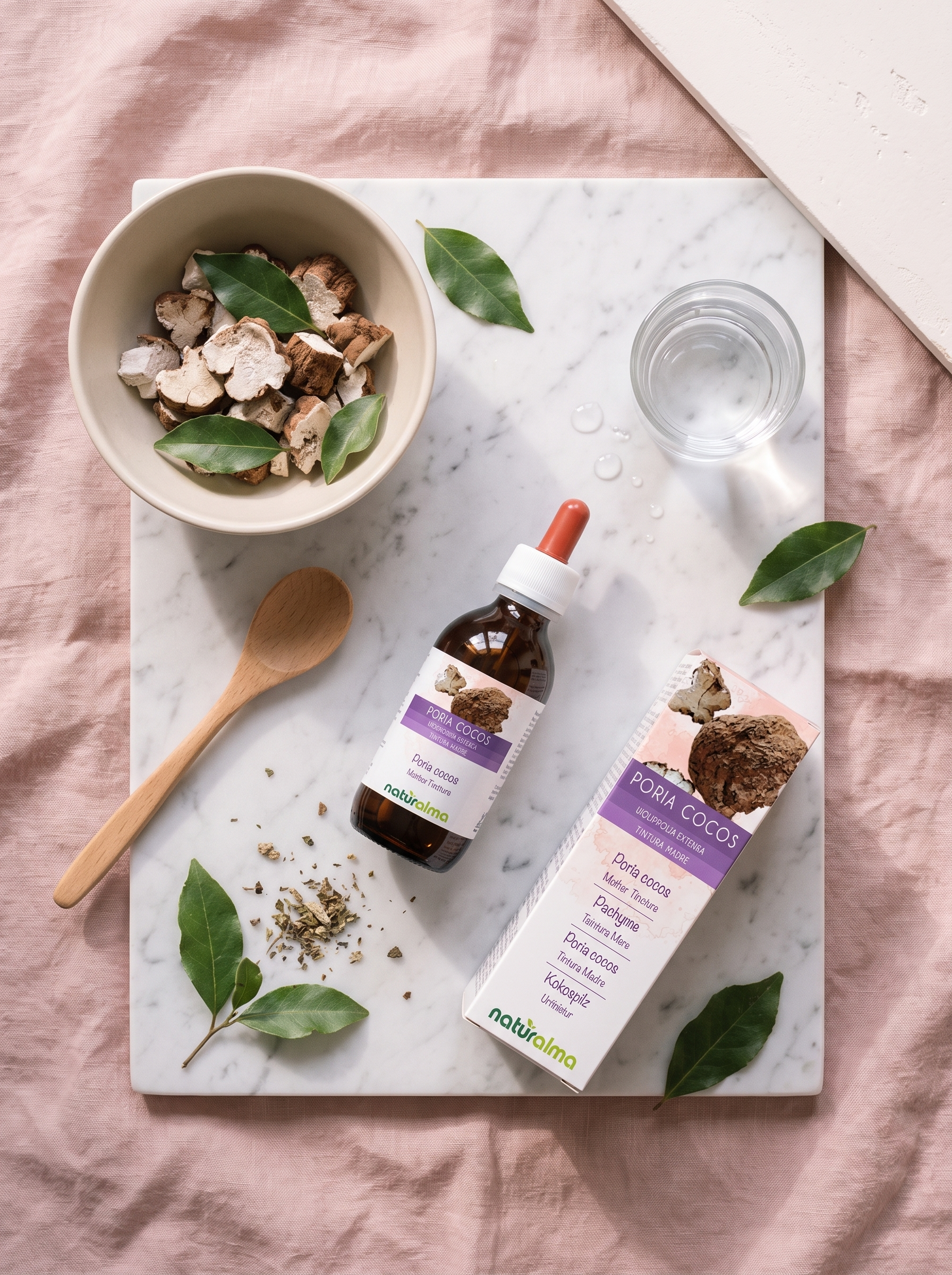
You've been putting them all in the same glass at seven in the morning, haven't you?
It happens to loads of people. The parcel arrives, there are two or three different mushrooms in it, and the routine becomes one single moment: everything together, first thing, while the kettle's on.
It's convenient, I get it. But it's also the quickest way to lose track of what you're actually taking. Because mushrooms don't all do the same job and they don't all belong at the same hour. Some you want at the front of the day, when everything's starting up. One in particular you want at the back, when the day is closing down.
And this is exactly the time of year when you notice it. The clocks have gone back, it's dark by five, and we're all rebuilding our evening routine: dinner earlier, the sofa, that heavy-legged feeling after eight hours on your feet or at a desk. That's where this one comes in.
Let me tell you the mistake straight away, so you're not left hanging: the mushroom I'm talking about today is not a morning tonic. Taking it at seven with all the others is like putting your pyjamas on at nine in the morning. No harm done, but the timing's all wrong.
Want to know which mushroom? It grows on pine roots, underground
Right, I'm talking about Poria cocos. Botanical name Wolfiporia extensa, and in Traditional Chinese Medicine it's been known for centuries by a far nicer name: Fu Ling.
It's not a mushroom you'd spot on a woodland walk, cap and stem and all. It grows below the surface, attached to pine roots, as a firm white mass. And in the Chinese tradition it's almost never a solo act: you find it inside dozens of formulas, as the component that holds everything else together.
What it's for, in plain English. Traditionally it does two things that interest us a lot, and — funnily enough — they both pull in the same direction. First: it supports the flow of fluids and helps drain the excess, what the Chinese texts call "damp". Second: it settles the mind, the restlessness, the thoughts going round in circles. In the tradition it's also seen as support for the spleen and for digestion.
So on one side the fluids, on the other a mind that quietens down. Now you tell me: when do you need those two things? At seven in the morning, when you're trying to get the engine going? Or when you finally sit down and realise your ankles are puffy and your head won't switch off?
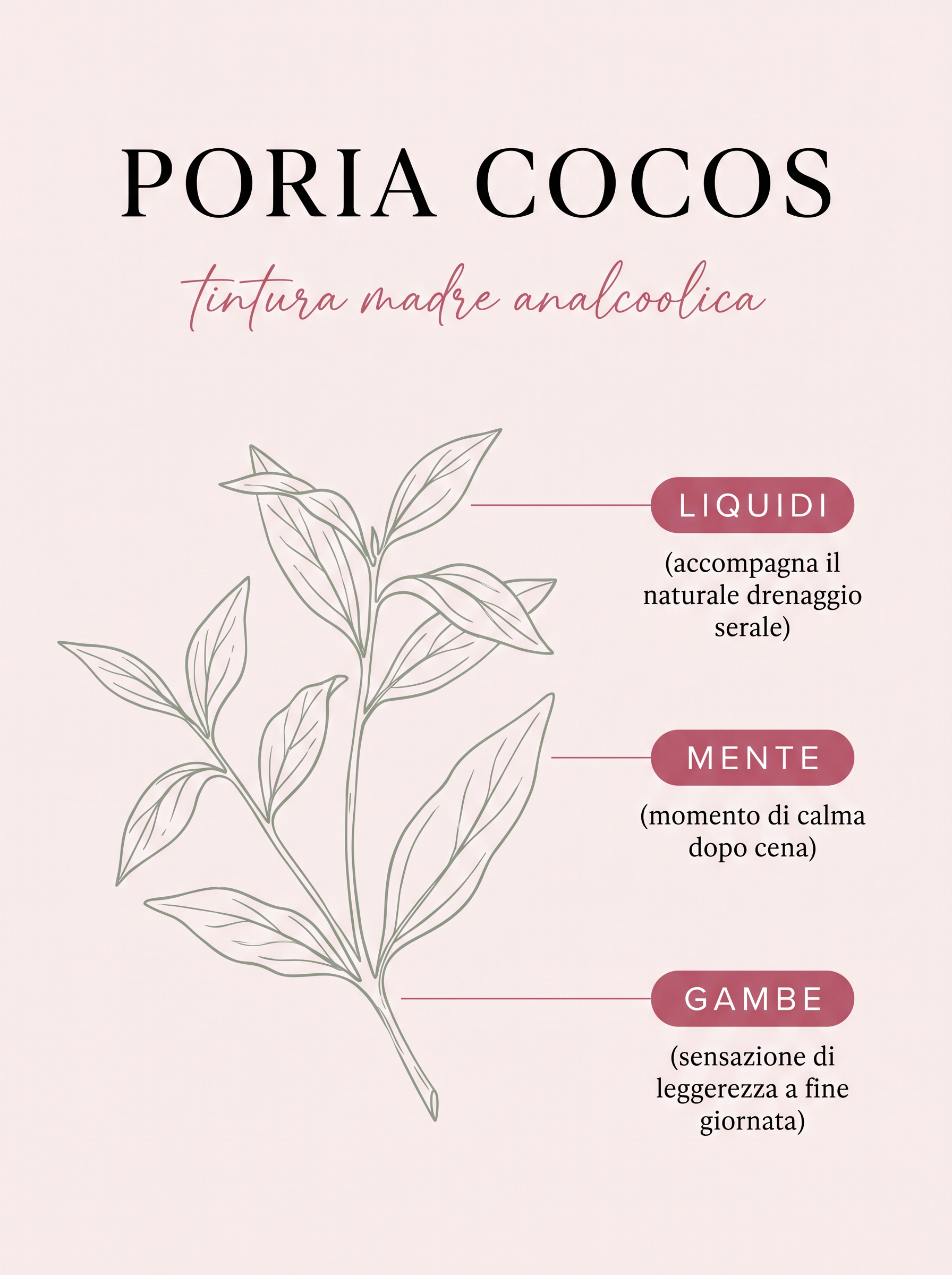
And now the bit you actually came for: why evening beats morning
Poria cocos is not a stimulant and it's not a sedative. It won't lift you up and it won't knock you out. So technically you can take it whenever you like: the label says exactly that, "at any time of day".
But "you can" and "it makes sense to" are two different things. And here's the practical reasoning.
First reason: swollen feet and ankles don't turn up at seven in the morning. They turn up at seven in the evening, after a day on your feet or stuck at a desk. You want to support the draining when it's actually needed, not twelve hours early.
Second reason, and this is the one that convinces almost everyone: the "settles the mind" side. If a plant or a mushroom traditionally has that profile, its natural moment is late afternoon and evening, when the day is winding down and your head would quite like to slow down with it.
Third reason, the practical and slightly boring but very real one: it supports the flow of fluids. So don't take your last dose at half past midnight, or you'll be up in the night. My practical advice is to finish with the evening dose around dinner or shortly after, not just as you're getting into bed. Give it an hour and a half of leeway.
To sum up, so it sticks: if you take one dose a day, put it in the late afternoon or after dinner. Leave the morning for something else.
How many drops, how to split the day, and which bottle lasts longer
Let's get to the real numbers, because that's what everyone's looking for.
The dose is 40 drops, which is 2 ml, diluted in a glass of water. One to three times a day. So you're looking at 40 to 120 drops a day, and no more than that. Those 40 drops contain 800 mg of poria cocos: three doses take you to 2.4 grams a day.
How I space them out, in practice. If you're starting now and you've never taken it, begin with one dose only, in the evening, for the first week. See how you feel, see whether you're getting up in the night, get your bearings. Then, if you want to go up, put the second dose in the early afternoon, not first thing. And if you get to three, slot the third in mid-morning, so they stay spread out and you don't have everything shifting at once.
Diluted in water, always. It isn't a harsh-tasting mushroom, but the glass of water has another purpose too: if you're working on fluids, you need to drink. It sounds like a contradiction and it isn't — people who drink too little tend to hold on to more.
For how long? A sensible course is four to six weeks, then you stop for about ten days and take stock. This isn't something to keep taking forever without ever asking yourself how you feel.
The bottles. There are two sizes and the only thing that changes is how long they last, not the product itself: PORIA COCOS Tintura madre analcoolica 60 ml and PORIA COCOS Tintura madre analcoolica 120 ml — the alcohol-free mother tincture, in both cases. Let's do the maths: at one dose a day, that's 2 ml, so the 60 ml covers you for roughly a month and the 120 ml for about two. If you go to two or three doses a day, the 60 ml empties in ten to fifteen days and the big one is clearly better value. My advice: first time round, get the 60 ml and try it. If you get on well with it and you know you'll reorder, the 120 ml makes far more sense.
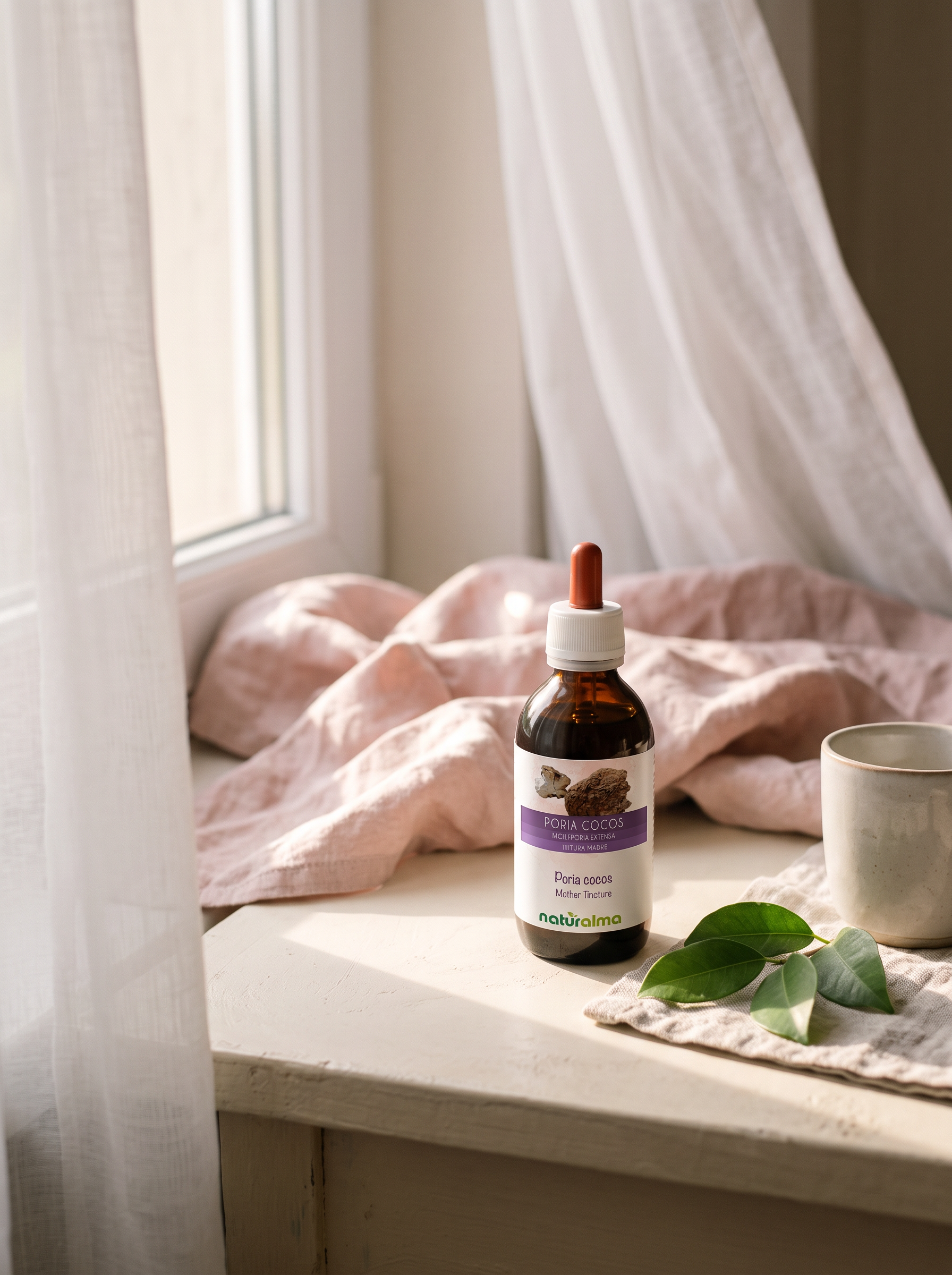
If you already own other mushrooms, how to make them live together without getting in a muddle
This is the question I get most often, so I'll deal with it head-on. Loads of people buy poria alongside other well-known mushrooms — reishi or cordyceps, say — and take the whole lot as soon as they wake up.
The issue isn't really "can you mix them or not". The issue is that this way you can't tell what's doing what. If something shifts over three weeks, who gets the credit? And if something doesn't sit right with you, which one do you drop?
So the rule I'd suggest is dead simple: split the day in two halves. The first half is for the mushrooms that feel more "switched on", the ones you take for energy and getting through the day. The second half, from late afternoon onwards, is for poria. Not in the same glass, not at the same hour.
And if you're starting from scratch with all of them? One mushroom at a time, ten days apart. It sounds slow, but it's genuinely the only way to work out what you need and what you don't.
One last important thing, and I always say it: I'm not a doctor. If you take medication — especially diuretics, or anything for your kidneys or blood pressure — check with your GP first. Same goes for pregnancy and breastfeeding. And keep the bottle out of reach of children.
Now you tell me: how many different mushrooms are in your cupboard right now, and are you taking them all at the same time? Let me know in the comments, I'm genuinely curious. And if you want your bottle, it's in the shop: just tap the little basket icon. Bye for now!
How many drops of Poria cocos should I take a day?
It's 40 drops, which is 2 ml, diluted in a glass of water, one to three times a day. So 40 to 120 drops in total, and no more than that. Those 40 drops contain 800 mg of poria cocos. If you've never taken it before, start with one dose a day for the first week.
Is it better in the morning or the evening?
The label says "at any time of day", but if you're only taking one dose I'd put it in the late afternoon or after dinner. In the Chinese tradition poria drains excess fluid and settles the mind: two things you need at the end of the day, not the moment you open your eyes. Avoid the last dose too close to bedtime, since it supports the flow of fluids.
How long can I keep taking it for?
A four to six week course is a good starting point. Then you stop for about ten days and see how you feel. It isn't something to keep going for months without ever taking stock.
How long before I notice anything?
On puffiness and fluids, if you're drinking enough, plenty of people notice something in the first or second week. On the calmer side, the head slowing down in the evening, it takes more patience: think three to four weeks. And if the swelling carries on or gets worse, do speak to your GP.
What's the difference between the 60 ml and the 120 ml bottle?
None, apart from how long it lasts. At one 2 ml dose a day, the 60 ml covers about a month and the 120 ml about two. If you take two or three doses a day, the 60 ml runs out in ten to fifteen days and the larger size is the sensible buy.
Is the mother tincture alcohol-free?
Yes — it's sold as PORIA COCOS Tintura madre analcoolica, the alcohol-free mother tincture, in 60 ml and 120 ml. For the exact composition always go by the label on the bottle you receive: that's where you'll find the full ingredient list.
Can I take it alongside other mushrooms or supplements?
Yes, but not all at the same moment. Keep the more energising mushrooms in the first part of the day and poria from late afternoon onwards. If you're starting from scratch, introduce one at a time, ten days apart, so you can tell what's actually helping. If you take medication, especially diuretics or anything for your kidneys or blood pressure, check with your GP first.
 Poria cocos — Tintura madre Naturalma
search “poria cocos” on naturalma.it
PORIA COCOS Tintura madre analcoolica 120 ml Naturalma on Amazon
or search “poria cocos naturalma” on Amazon
Poria cocos — Tintura madre Naturalma
search “poria cocos” on naturalma.it
PORIA COCOS Tintura madre analcoolica 120 ml Naturalma on Amazon
or search “poria cocos naturalma” on Amazon
 Bloating, restless nights and constant sugar cravings?59 sec
 That burning feeling that creeps up after meals just won't quit?45 sec
 Stage 3 cellulite?99 sec
 My routine for a lighter, less bloated tummy, from breakfast to after dinner142 sec
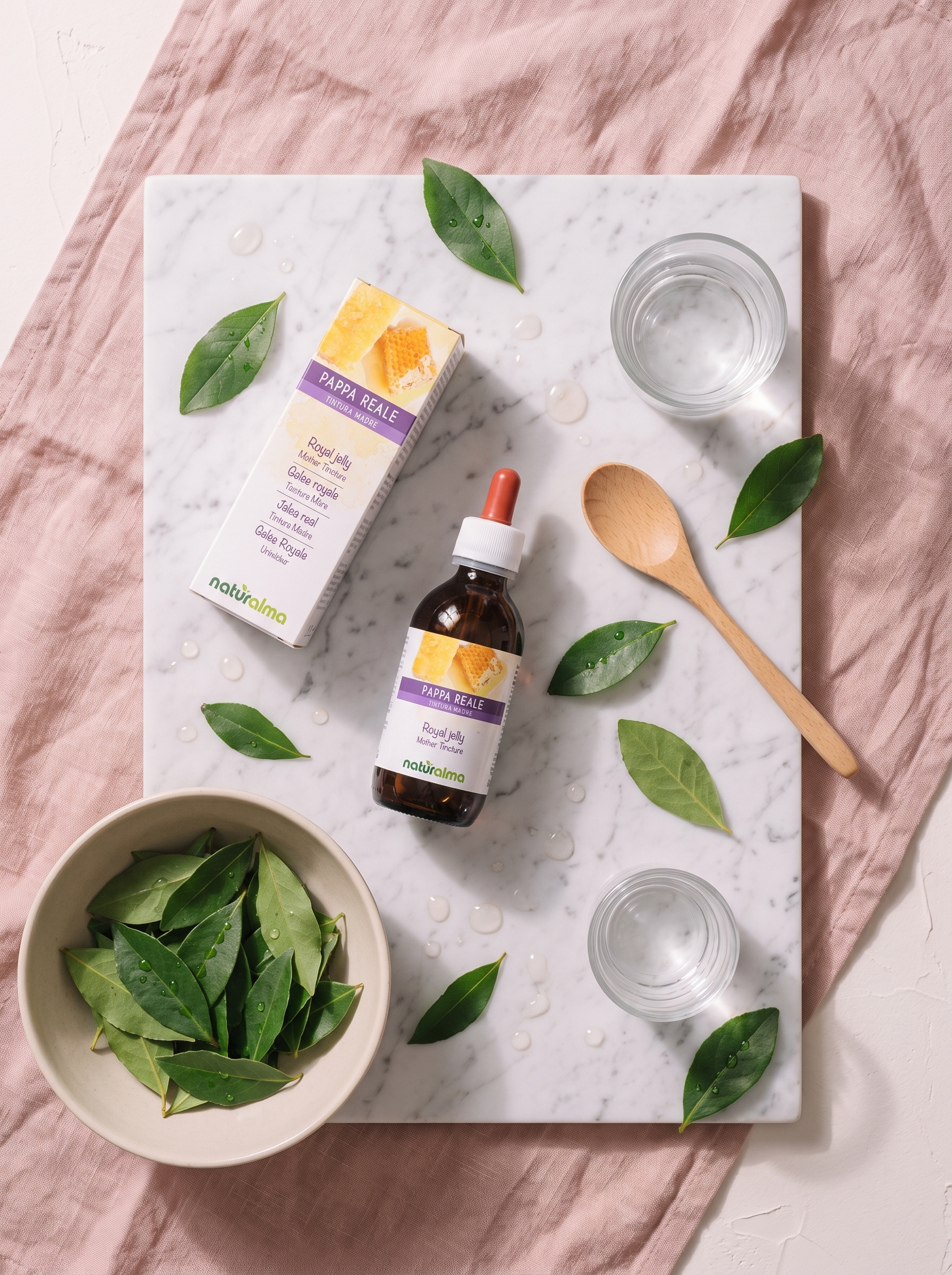
Royal Jelly: Not Coffee, and Not Judged in Three Days
Royal jelly mother tincture: 40 drops (2 ml) give you 400 mg, one to three times a day. When to take it, how long for, and whether to pick 60 or 120 ml.
Keep reading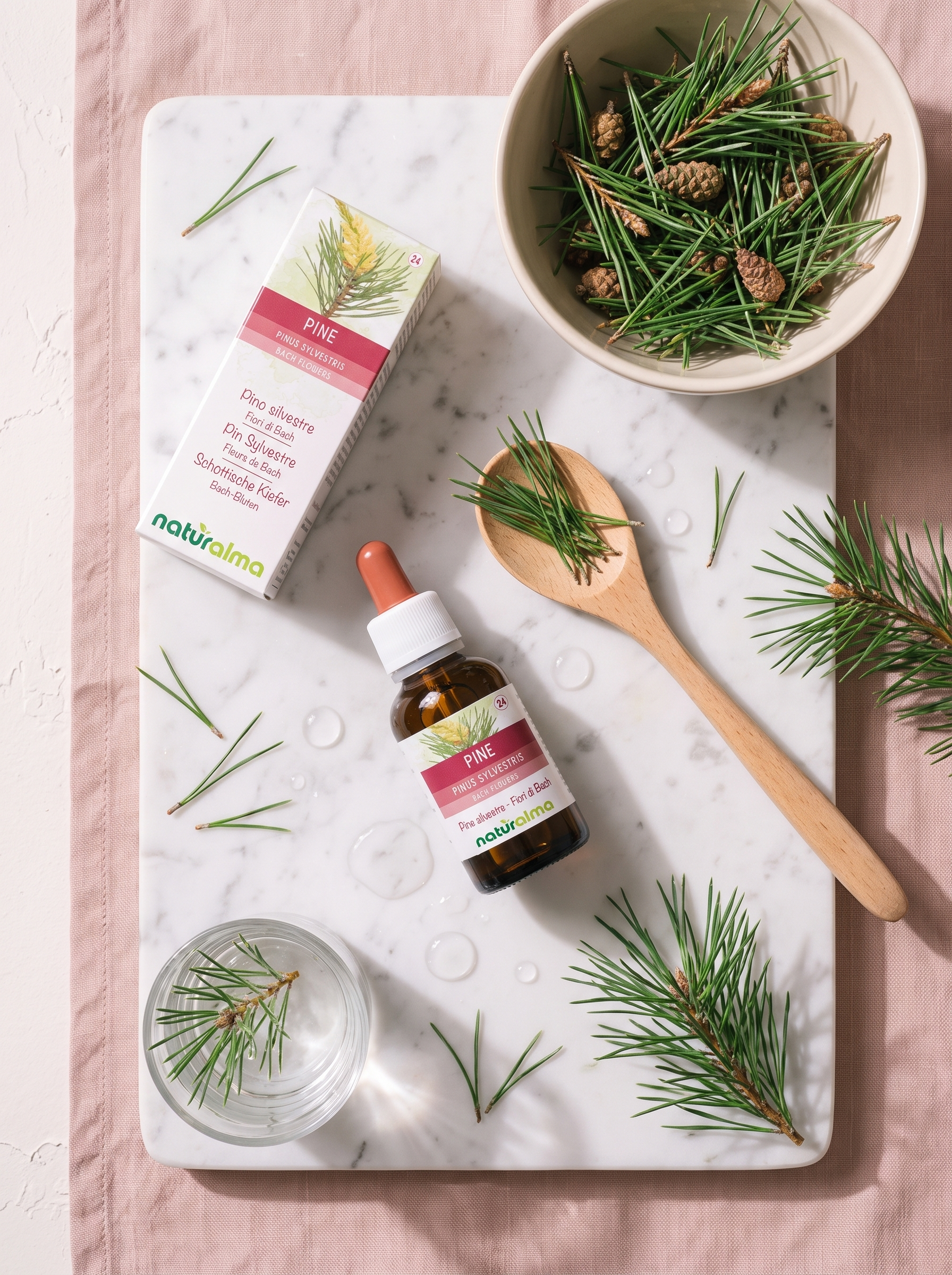
Pine Bach Flower: How Many Times Did You Say Sorry Today?
Pine is the Bach flower for people who apologise for everything, even when it isn't their fault. How many drops, when to take them and which 30 ml bottle to pick.
Keep reading