Sugar Kelp or Kombu: 1 ml a Day Covers 100% of Your Iodine — and That's the Ceiling
 di Bianca Ioppolo · 2026-08-04 · 6 min
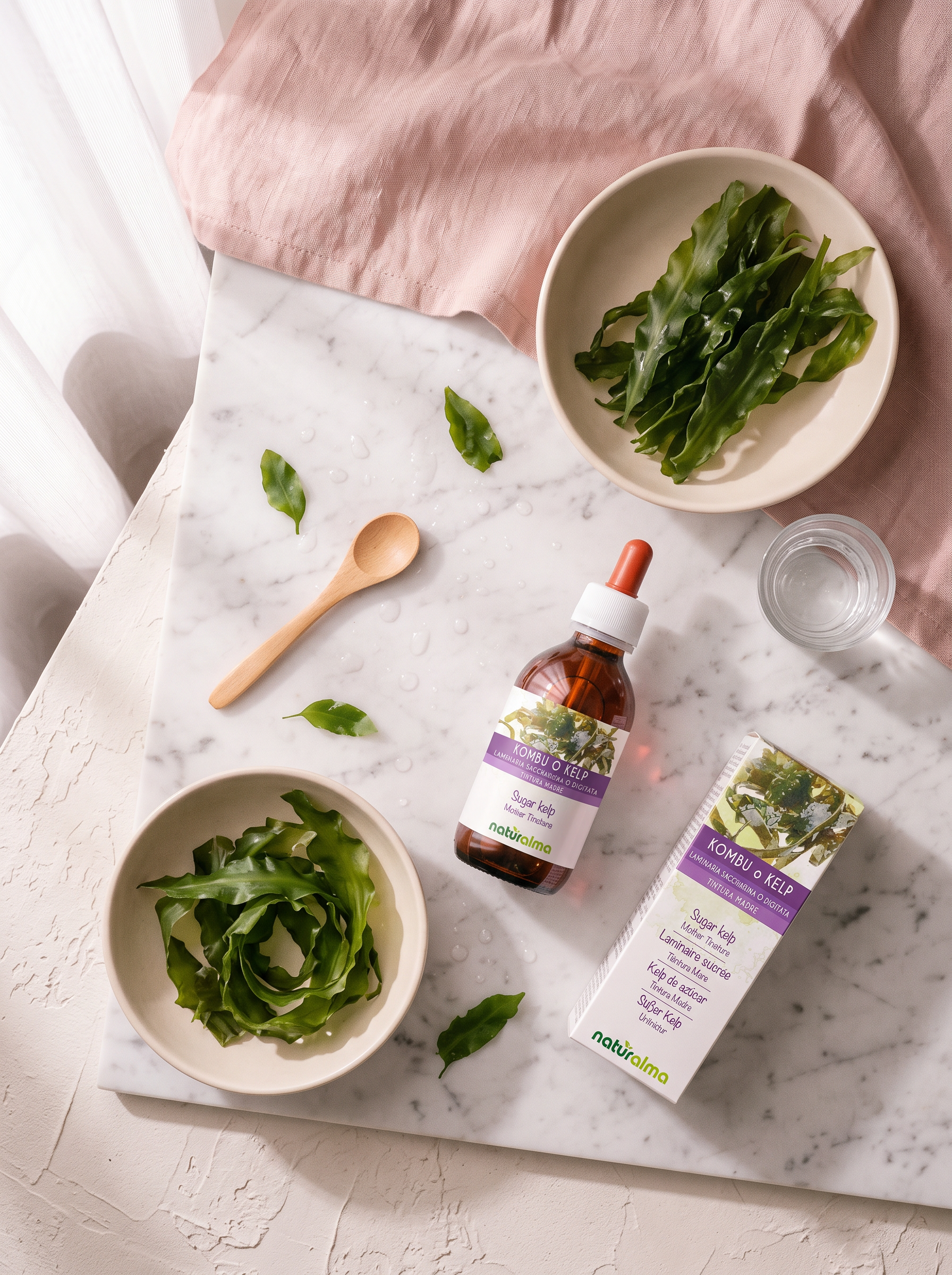
Before it goes in your basket, check one number
Nine out of ten people who buy a seaweed supplement never read the most important thing on the label.
It isn't the name of the plant. It isn't the size of the bottle. It's how many micrograms of iodine you're taking every single day.
With most plants, the instinct is: "if I take a bit more, maybe it works better." Here that logic flips completely. The stated dose is already all the dose you need, and going beyond it gives you no extra benefit whatsoever.
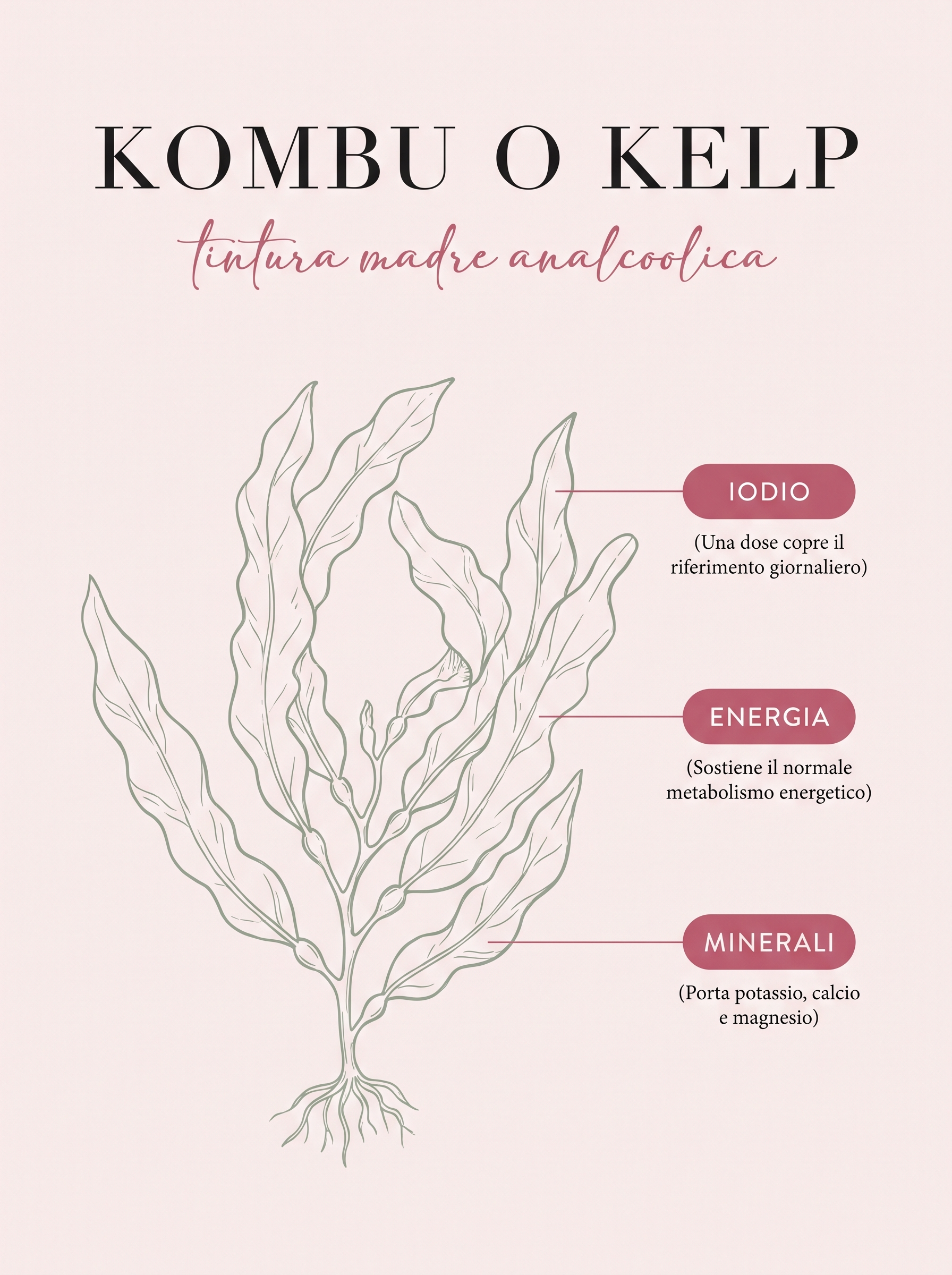
So here's the number that matters, before you go hunting through the small print: 1 ml contains 150 micrograms of iodine. That's 100% of the NRV, the Nutrient Reference Value. Once a day and the job is done.
And there's something the product page never puts in bold: there's a group of people who shouldn't take this seaweed at all. I explain exactly who in the last section, so don't skip it.
Want to know which seaweed we're talking about? It grows in cold seas
Picture long brown fronds, as wide as a belt, swaying in the cold water of the Atlantic and the Pacific. Proper underwater forests — the same kelp beds you'll find off the coasts of Scotland and the west of Ireland.
I'm talking about sugar kelp or kombu. Botanically, Laminaria saccharina and Laminaria digitata.
It's one of the most studied seaweeds in the world, and for one reason: it concentrates iodine like almost nothing else in nature. Alongside the iodine it brings potassium, calcium, magnesium and its typical polysaccharides, such as alginate.
In Chinese and Japanese tradition, kombu has been treated for centuries as a wellbeing food, not just something tasty. And in some European folk traditions it was given mainly inland, in places far from the coast where iodine was scarce. It also had a reputation for skin and hair, again thanks to that mineral profile.
Why is it so searched for right now? Because September and October are the months of good intentions. The routine restarts, everyone wants their energy back, people hear the word metabolism and end up typing "seaweed for metabolism". The link is real: iodine contributes to normal thyroid function and to normal energy-yielding metabolism. But it stays a nutritional contribution, not a shortcut. No seaweed does the work that sleep, movement and decent meals do.
Now the bit you actually came for: how much to take
Directions for use, exactly as they appear on the label of the Naturalma alcohol-free mother tincture: 1 ml diluted in a glass of water, once a day, at any time.
That's it. There's no "extra strength" version, no three-times-a-day routine.
That millilitre gives you 100 mg of sugar kelp or kombu and 150 mcg of iodine. 100% of the NRV means one single dose already covers the daily reference intake for an adult. Which is why "do not exceed the recommended daily dose" — a line that reads like boilerplate on most supplements — needs taking literally here.
Timing is free, and that's a genuine convenience: no tying it to meals, no working out whether your stomach is full or empty. My practical tip, though, is to hook it onto something you already do every day — the glass of water first thing in the morning works well. A mother tincture is astonishingly easy to forget, and a supplement you take every other day by accident tells you nothing about how it makes you feel.
For how long? Sugar kelp or kombu is used in cycles, not forever. One or two months, then a break, and you take stock of how you're doing. If you're taking it because you suspect you're low on iodine from your diet, that's something to check with your doctor and a blood test, not by gut feeling.
The taste is the sea: slightly salty, clearly iodine-y. Diluted in a full glass of water you barely notice it. If you really can't get on with it, a splash of juice instead of water sorts it out.
60 ml or 120 ml: the only real difference is how many days it lasts
This choice is simpler than it looks. It's one multiplication.
You take 1 ml a day. So the 60 ml bottle covers roughly 60 days, the 120 ml roughly 120. Two months against four.
Inside it's the same product at the same strength: only the quantity changes, and therefore how long it lasts. There's no "stronger" bottle, and that's a mix-up I hear constantly.
So how do you choose? If it's your first time with sugar kelp or kombu, start with the 60 ml. Two months is a full cycle: plenty of time to see whether you get on with the taste, with the daily habit and with how you feel. If you already know it, you've used it before and you know you'll go back to it, the 120 ml is the practical pick: fewer reorders, fewer bottles running out at the wrong moment.
One thing about the big bottle: once opened, keep it tightly closed and away from light. And always read the label on the bottle you're buying, because that's where you'll find everything in black and white — full composition, iodine per dose, warnings. It's the part almost nobody reads, and with this seaweed it counts double.
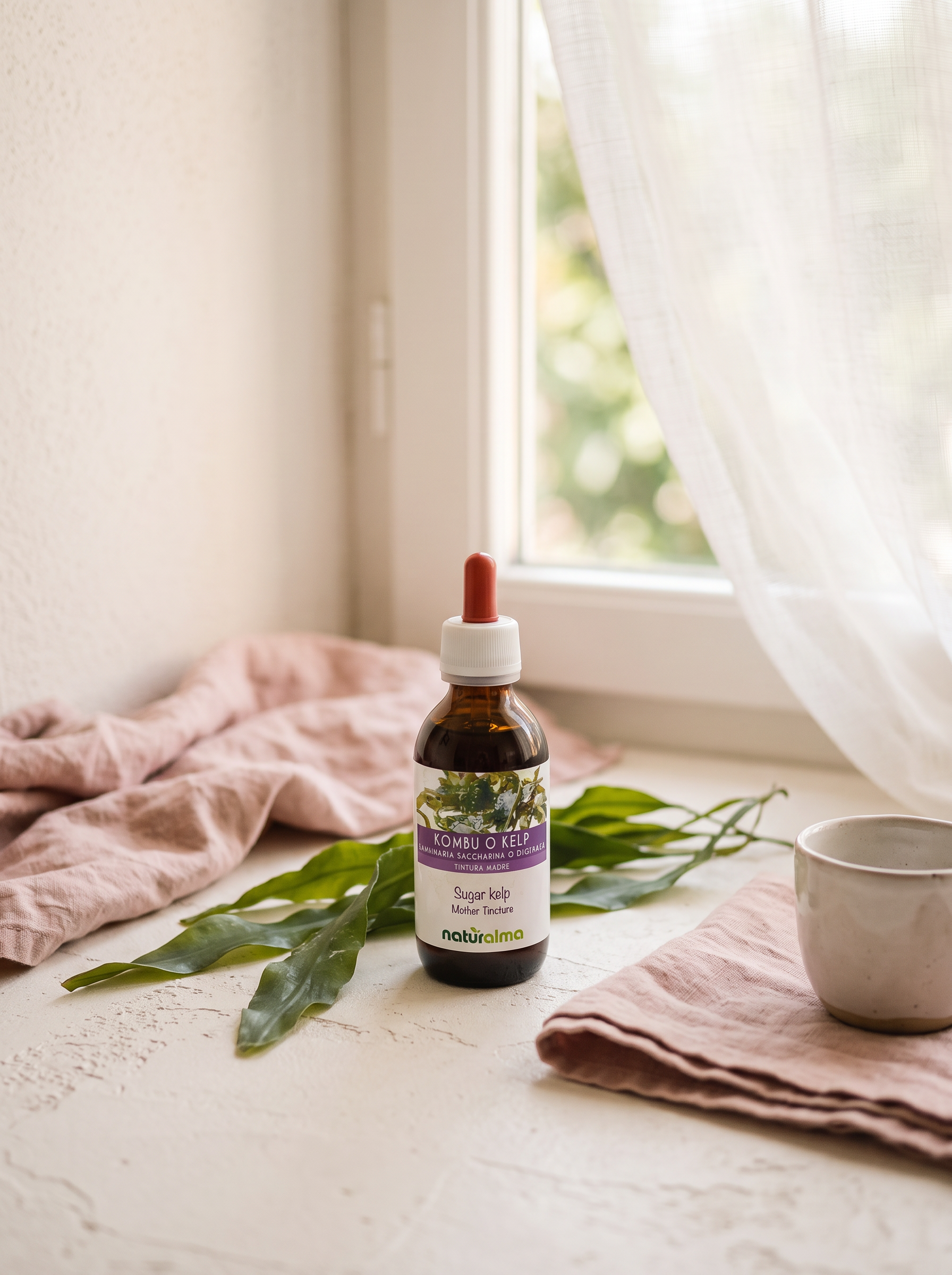
A word of caution: with this one, care matters more than usual
Here's the part I promised you, and I'll be blunt.
The label says: do not use in case of thyroid disorders. That isn't generic small print, it's a specific instruction. If you know something's off with your thyroid, or you're already having checks or treatment for it, this product isn't for you. Full stop. In that case the only sensible move is to speak to your doctor before taking any seaweed-based supplement.
Same care if you're already taking other supplements: check whether they contain iodine, because it's incredibly easy to stack two of them without noticing and end up at double the daily reference. Multivitamins, hair and nail products, "metabolism" formulas — iodine turns up in them far more often than you'd think.
In pregnancy and while breastfeeding, iodine needs change, so the decision isn't yours and it isn't mine: it belongs to the doctor or midwife looking after you.
Keep the product out of the reach of children. And remember that a food supplement is no substitute for a varied and balanced diet: it belongs inside a healthy lifestyle, not as a patch over habits that aren't working. If you've been tired for weeks and can't work out why, the answer isn't in a bottle — go and get checked.
As I always say, I'm not a doctor. With a mineral as specific as iodine, if you're in any doubt, the answer comes from a professional with your results in front of them, not from a video and not from an article.
Had you ever actually stopped to check how much iodine you were getting a day, or have you only just found out? Tell me in the comments — I'm genuinely curious how many people notice. And if you want a look at the two sizes, the 60 ml and the 120 ml, they're just below: count the days you need and pick yours. Take care!
How much sugar kelp or kombu should I take a day?
1 ml diluted in a glass of water, once a day. That's already 100% of the Nutrient Reference Value for iodine (150 mcg), so don't exceed the daily dose stated on the label.
Is it better in the morning or in the evening?
The label says "at any time", so it's up to you. In practice, tie it to something you never skip — the glass of water when you get up is ideal — so you don't forget it.
How long can I keep taking it for?
It's used in cycles, usually one or two months, then a break while you see how you're doing. If your reason for taking it involves the thyroid or a possible low iodine intake, your doctor decides how long.
What's the difference between the 60 ml and the 120 ml bottle?
Only how long it lasts. Same product, same strength: since you take 1 ml a day, the 60 ml lasts about two months and the 120 ml about four. The bigger bottle is not more concentrated.
Who shouldn't take it?
Anyone with a thyroid disorder — the label says so explicitly. Avoid it in pregnancy and while breastfeeding unless your doctor says otherwise, keep it out of the reach of children, and don't take it on your own initiative if you're on any medication.
Can I take it alongside other supplements?
Yes, but read the other labels first: if they contain iodine you can stack it and go past the daily reference without realising. Multivitamins and hair and nail formulas often include it.
How long before I notice anything?
Don't expect an instant effect: this is a nutritional intake of iodine and minerals, not a hit you feel after one glass. Think in weeks, taken consistently. If the problem persists, speak to your doctor.
 Kombu o kelp — Tintura madre Naturalma
search “sugar kelp kombu” on naturalma.it
Kombu o kelp — Tintura madre Naturalma
search “sugar kelp kombu” on naturalma.it
 Bloating, restless nights and constant sugar cravings?59 sec
 That burning feeling that creeps up after meals just won't quit?45 sec
 Stage 3 cellulite?99 sec
 My routine for a lighter, less bloated tummy, from breakfast to after dinner142 sec
Royal Jelly: Not Coffee, and Not Judged in Three Days
Royal jelly mother tincture: 40 drops (2 ml) give you 400 mg, one to three times a day. When to take it, how long for, and whether to pick 60 or 120 ml.
Keep reading
Pine Bach Flower: How Many Times Did You Say Sorry Today?
Pine is the Bach flower for people who apologise for everything, even when it isn't their fault. How many drops, when to take them and which 30 ml bottle to pick.
Keep reading